There’s something strangely grounding about sitting down with a blank sheet of paper. In a world where nearly every thought is captured by a phone app, digital planner, or cloud document, going back to something as simple as printed paper can feel like rediscovering a forgotten tool. For many people—myself included—printable paper has become an unexpected companion in creative writing sessions, sketch brainstorming, and early-stage idea development.
This isn’t about ditching technology or claiming analogue is “better.” It’s simply about how a tactile medium can create a different mental environment—one that sometimes sparks creativity in ways digital tools don’t. In this post, I want to share how printed paper has helped me explore ideas more freely, how I organise my creative sessions, and a few techniques that have worked surprisingly well. I’m also genuinely curious to hear how others combine analogue and digital processes, because everyone has their own workflow quirks.
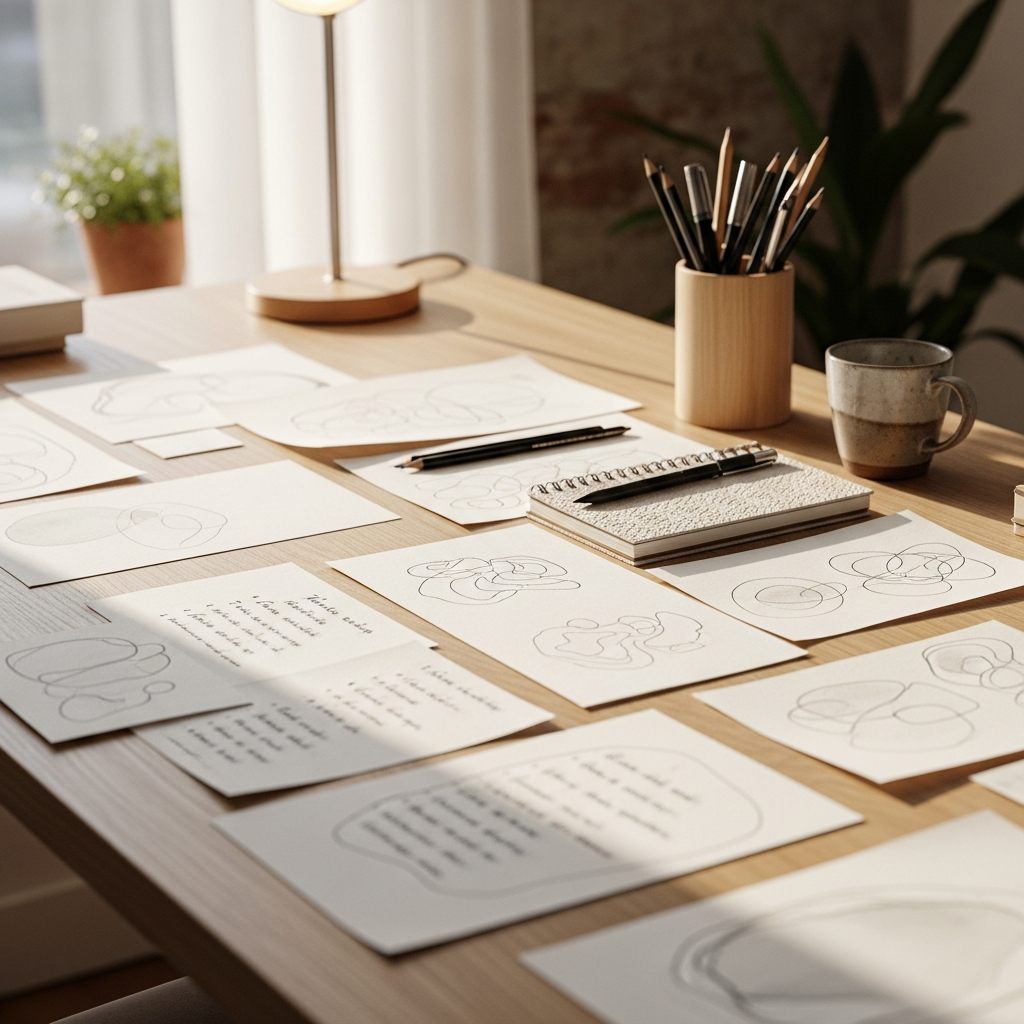
As you read through, feel free to share your own habits: Do you use paper as part of your writing or sketching process? What types of formats help you think most clearly? Do you blend digital and analog or lean fully into one side?
Why Paper Still Works in a Digital World
Even with the convenience of digital devices, printable paper offers a kind of mental breathing room. There’s no screen glare, no notifications, no tabs tempting you to drift off, and no apps competing for attention. Just you and the page.
A lot of writers and artists describe paper as offering a “slower” way of thinking, where ideas are formed with more intention. It doesn’t mean digital tools aren’t useful (they definitely are), but paper removes friction in a different way. There’s no loading time or formatting to worry about. You’re not selecting brushes or switching pen sizes. You simply write or draw.
If you’ve ever felt overwhelmed by too many options in a digital tool, you probably know what I mean. Paper sets natural limits, and those limits can sharpen focus. Have you noticed that creative ideas sometimes flow better when the tools are simple?
How Printable Paper Helps Creative Writing
1. Brainstorming Without Overthinking
When I brainstorm digitally, I sometimes get caught up in adjusting spacing, rewriting lines, or deleting things prematurely. On paper, the permanence of ink or pencil encourages commitment. Even messy scribbles end up being useful because they show the progression of thought.
I often start with:
Mind maps
Freewriting sessions
Quick scene ideas
Character notes
Paper makes these feel more organic. Mistakes become part of the page rather than something to erase.
How do you handle brainstorming: fully digital, or do you use a notebook/printed sheets to kick things off?
2. Breaking Writer’s Block With Physical Movement
There’s a tactile rhythm to writing by hand. The movement itself can nudge your brain into a different gear. When I hit a creative wall, switching to paper often helps me “unstick” sentences or spark a new angle.
Sometimes I’ll print lined or unlined pages and spread them across the table so I can physically rearrange ideas. It’s like storyboarding without needing specific tools. The simple freedom to shuffle, flip, or pin pages sometimes leads to connections I didn’t see before.
Do you ever change physical environments or media when you feel blocked? What works for you?
3. Layering Ideas Slowly
Digital speed is a blessing until it becomes too fast. It’s easy to race ahead before ideas are fully formed. On paper, the slower pace forces me to clarify what I mean, choose words more intentionally, and linger on sentences longer.
Slowing down doesn’t always mean writing less—it often means writing better.
How Printable Paper Helps Sketching and Visual Ideation
1. Starting Rough Without Pressure
There’s something psychologically freeing about knowing that a sheet of paper is just… paper. No need for perfect lines, symmetry, or polished results. It invites experimentation.
Sometimes I print grids, dotted pages, or plain sheets, depending on the mood:
Grids help with structure or design sketches
Dots help with loose shapes and proportions
Blank pages are great when nothing needs structure at all
Switching formats influences the kind of ideas that emerge. Just changing the paper layout can shift the style of sketches I produce. Have you played with multiple paper formats? Which ones help you loosen up creatively?
2. Visual Mapping of Concepts
When working through story ideas, worldbuilding, or abstract thoughts, sketching diagrams or doodles on paper often captures emotion and movement that typed notes can’t. The imperfections and quick strokes carry hints of the idea’s “feel” that sometimes get lost digitally.
This helps especially with:
Scene flow
Mood concepts
Character silhouettes
Spatial relationships
Story pacing arcs
Do you ever use drawing—even rough doodles—to shape ideas, even if you’re not an artist?
3. Manual Layers for Depth
One unexpected bonus of working on paper is layering ideas: shading part of a sketch, drawing margin notes, circling themes, adding arrows, and annotating in the moment. It’s messy, but it’s real. Those marks often lead to insights that polished digital tools hide.
There’s value in the physical chaos of creativity.
Combining Digital and Paper Workflows
A lot of people blend analogue and digital tools rather than sticking to one. For example:
Rough ideas on paper
Polished work or revised drafts typed digitally
Sketches scanned or photographed for editing
Story outlines drafted by hand before moving to writing apps
Printed worksheets used for brainstorming or planning
This hybrid method keeps the tactile benefits of paper while unlocking the speed and flexibility of digital tools.
If you’ve tried mixing mediums, what’s your process like? Do you start on paper and finish digitally, or the other way around?
Practical Tips for Using Printed Paper in Creative Work
1. Use different layouts for different stages
Lined, dotted, blank, or graph-style sheets each create a different mental frame. Rotate them depending on the task.
2. Keep a “catch-all” stack nearby
Even a small stack of printed sheets can become a reliable scratchpad for sudden ideas.
3. Write freely, edit later
Paper works best when you allow imperfections. The editing phase happens later when you transfer ideas to digital.
4. Spread your ideas out physically
Laying out multiple pages helps you see patterns, organise sequences, and compare concepts at a glance.
5. Don’t worry about page order
Reordering printed sheets is part of the fun. Treat them like movable puzzle pieces.
6. Keep theme-based piles
For example:
character pile
worldbuilding pile
scene ideas pile
design-inspired sketches
It’s a simple analog database.
Which of these feel most natural to your workflow? Do you organize ideas spatially or chronologically?
Why This Topic Matters for Creative Communities
Creative thinking thrives through sharing processes. Seeing how others approach brainstorming, drafting, mixing mediums, or handling creative blocks can expand our own toolkit.
Everyone has their own approach—some deeply structured, others spontaneous. Some swear by tablets and styluses, others by notebooks, others by voice notes or whiteboards. Paper is just one option, but it’s a versatile one. Conversations about process help remind us that creativity is not one-size-fits-all.
Your Turn—Share Your Workflow!
Now I’m really curious about how others navigate their creative flow. Do you incorporate paper into your writing or sketching process?
If so:
What kinds of paper formats do you enjoy?
Do you use paper mainly at the start, at the end, or throughout the creative process?
What’s one technique or habit that helps you get unstuck creatively?
Do you mix analogue and digital tools, or prefer one over the other?
What’s your personal workflow for generating ideas, and how does paper fit into it—if at all?
