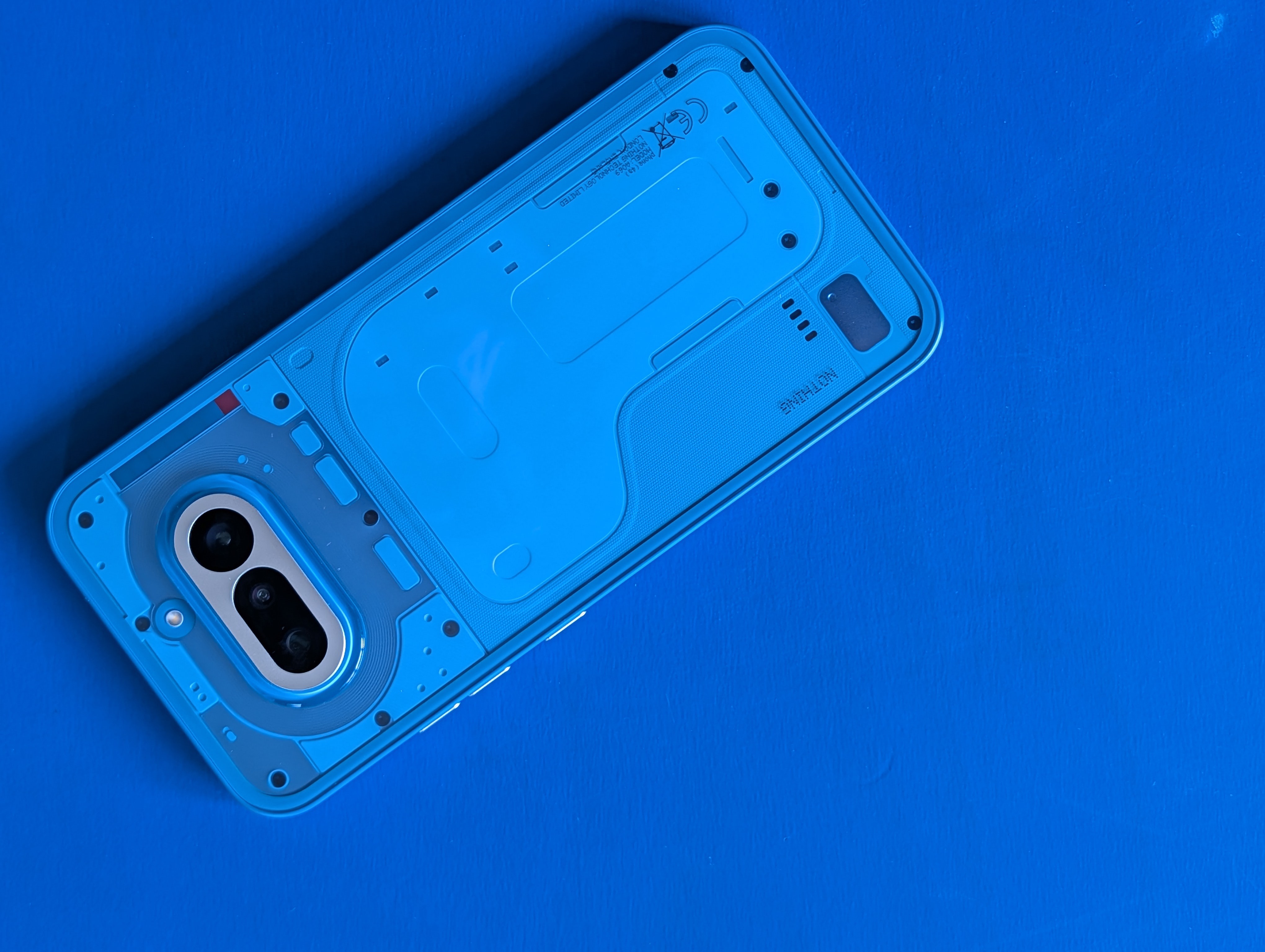
Just under a month ago, I unboxed the Nothing Phone (4a), and I’ve been using it ever since. Nothing was kind enough to send me the blue variant, which is a pretty fresh and welcome departure from the usual black and white combo we see coming to market. Over the last few weeks, I’ve put the Phone (4a) through its paces as I really want to understand if the device is worth it, and what improvements Nothing has made from generation to generation.
The Plus Points (+)
Stunning Display
Flagship-grade Zoom
Battery Champion
Solid Build Quality
Clean Software
The Minus Points (-)
Geographically Locked eSIM
No Wireless Charging
Software Support at 3 years (major updates) – there’s better out there
Design and Build Quality: Feels Sturdier, Looks Smarter
You’re reading this on Community, so you know that Nothing has always leaned heavily into its aesthetic. Sometimes fans love it, and sometimes fans aren’t sure about it, but the Phone (4a) continues to evolve its transparent design. The device remains striking, though. Especially when face down, the three cameras sit high on the back, housed neatly inside a pill-shaped aluminium element. The clear glass body highlights the battery structures and the new Glyph Bar, looking properly premium.
The good looks are welcome, but actually, there are tangible upgrades to the build quality too. The device is wrapped in Corning Gorilla Glass 7i , and Nothing claims a 34% increase in bend resistance compared to the Phone (3a). Having lugged it around in my pocket for a month, I can attest it feels incredibly robust; I’ve rocked the phone caseless and see very little wear. One thing I haven’t tried but will trust Nothing’s spec sheet on is the device’s IP64 rating , meaning it can handle being submerged in up to 25 cm of water for 20 minutes … not one I’ve tried, but I’m sure it works 😉
We also have to talk about the Glyphs because we have a new Glyph layout for this generation of device. The new Glyph Bar utilises a rectangle of 63 mini-LEDs in 7 squares , including the red recording light to let folks know when you are filming. The Glyphs can be divisive, but I still find myself using them for notification management and also for Live Updates from Uber. I still think the Glyph Matrix on the Phone (3) is more useful than the light patterns, but it’s nice to see the Glyphs live on and Nothing thinking of ways to evolve them.
The Display & Audio: Surprisingly Crisp, Bright & Punchy
You might want to put your device screen down so you can enjoy that transparent design, but you can’t miss the screen on the Phone (4a). It’s an absolute triumph. You have a 6.78-inch AMOLED panel which has been bumped up to a 1.5K resolution. It’s a very impressive screen and stands out next to even more premium devices that I own… when put next to the Google Pixel 10 Pro XL, for example, I prefer the screen on the (4a).
My love for the screen might be because it is 23% brighter than the Phone (3a) I used for just under a year. For screen lovers, it has a peak brightness of 4,500 nits and a dynamic 120 Hz refresh rate. Simply, this makes the whole experience feel fluid. It registers taps and swipes more than twice as quickly as the Phone (3a) , thanks to an instant touch sampling rate of up to 2,500 Hz. And if you’re like me and use your phone late at night, the 2,160 Hz PWM dimming frequency makes it much easier on the eyes.
On the audio front, I’ve been impressed by Nothing gradually improving their speakers. The (4a) comes with dual stereo speakers, and I have to admit they pack a decent punch. I spend a lot of my day watching YouTube videos in the background, and these speakers never let me down.
Cameras: The Periscope Advantage
The camera module is where the Phone (4a) truly flexes its upgraded muscles vs. the Phone (3a). The primary camera is a 1/1.57″ 50MP Samsung GN9 sensor supported by OIS and EIS , but you also have a periscopic telephoto lens, which I’ve loved using for portrait photography. Rounding out the rear array is an 8MP Sony ultrawide lens , while the front has a 32MP Samsung KD1 camera for decent selfies.
Software processing has also taken a step forward, and I’ve been incredibly impressed by the cameras.
Software: Essential
This device comes preinstalled with Nothing OS 4.1, based on Android 16, and it remains one of the cleanest and most enjoyable Android experiences. Nothing is promising 3 years of major Android updates and 6 years of security patches; this ensures longevity, but the market is moving on from 3 years, and it’d be good for Nothing to support their devices (with major updates) for longer.
When you look at the hardware, you’ll notice Nothing has moved the “Essential Key” to the left side of the frame. I’ve been using it constantly to trigger voice notes or capture what is on my screen. I do welcome the button change, though—it leads to fewer accidental presses.
The introduction of “Playground” is another brilliant move, allowing users to browse and download community-made Essential Apps. I’ve not had enough time to explore what’s available, but the community-driven approach Nothing has taken for these ‘mini apps’ is fantastic.
Performance and That One (a)nnoying Omission
The Phone (4a) is powered by the Snapdragon 7s Gen 4 chipset. It handles day-to-day tasks effortlessly and boasts 10% better power efficiency than the chip inside the Phone (3a). For most, this means the experience will be consistently good enough; you will not notice nor feel frustration due to the chipset. And, when you start gaming or doing some heavy lifting, it’s still surprisingly capable.
Any battery anxiety will be practically non-existent. The model I’ve been testing packs a massive 5,080 mAh battery which routinely delivered 9 hours of screen-on time, and I never had any complaints about the 50W wired charging , which meant when the battery did die, I was back up to 60% in 30 minutes.
If I have to level one major criticism at the hardware, it’s connectivity. In 2026, the lack of universal eSIM support is a miss. I travel a lot and use eSIM providers when abroad, so I could never daily drive this device due to its lack of eSIM functionality (restricted exclusively to the Japanese market). It was the same for the Phone (3a), but this is incredibly frustrating as I don’t want to fiddle with physical Nano-SIMs.
Verdict
The Nothing Phone (4a) is an evolution in the best way; it takes the solid foundation of the (3a) and elevates it with a vastly superior, brighter display , a flagship-tier periscope zoom lens , and a battery that simply won’t quit. Aside from the baffling lack of global eSIM support, it’s a win.
8/10 – An absolute mid-range marvel that gets almost everything right, held back only by a few missing quality-of-life features like global eSIM and wireless charging.
