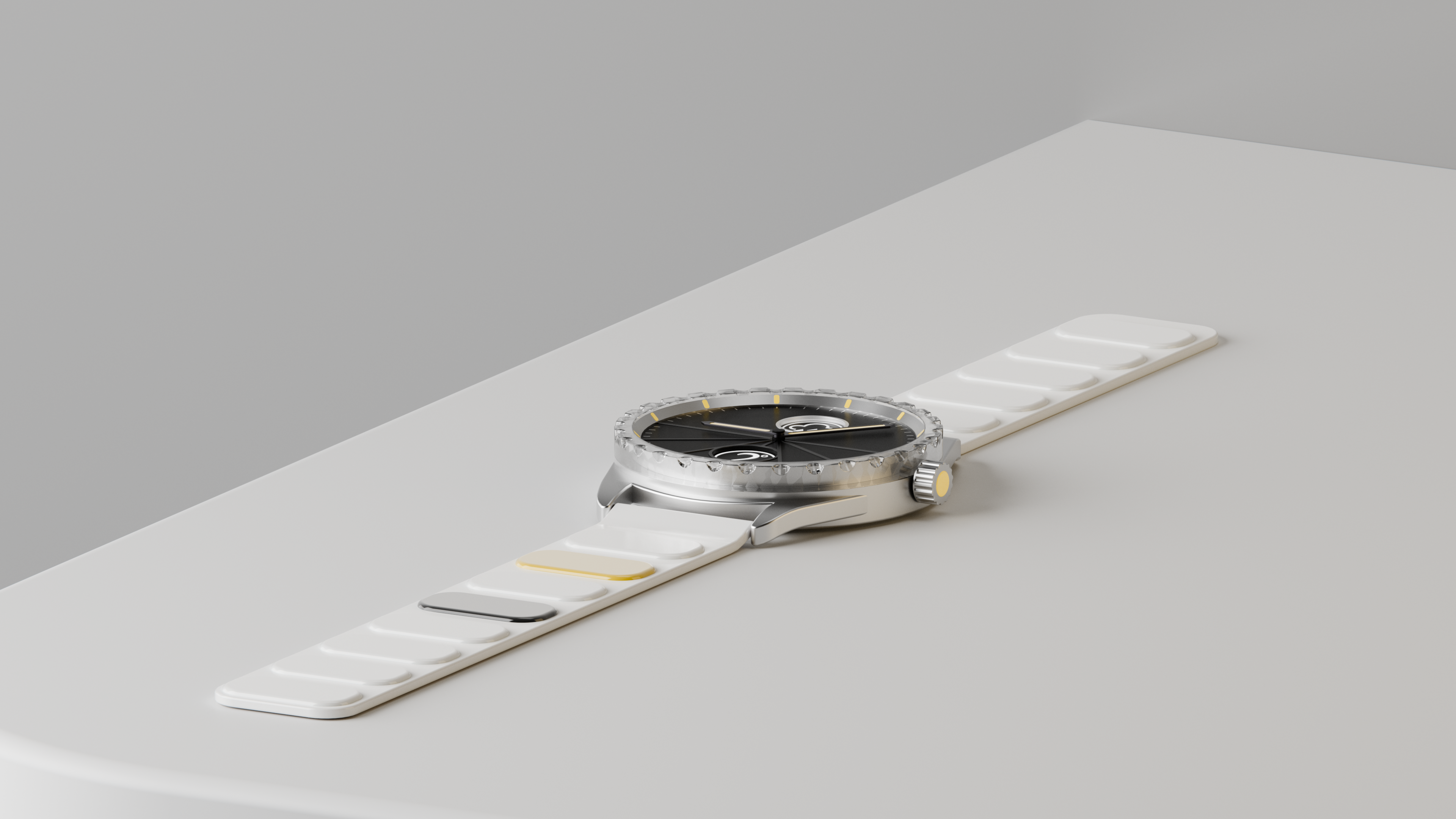
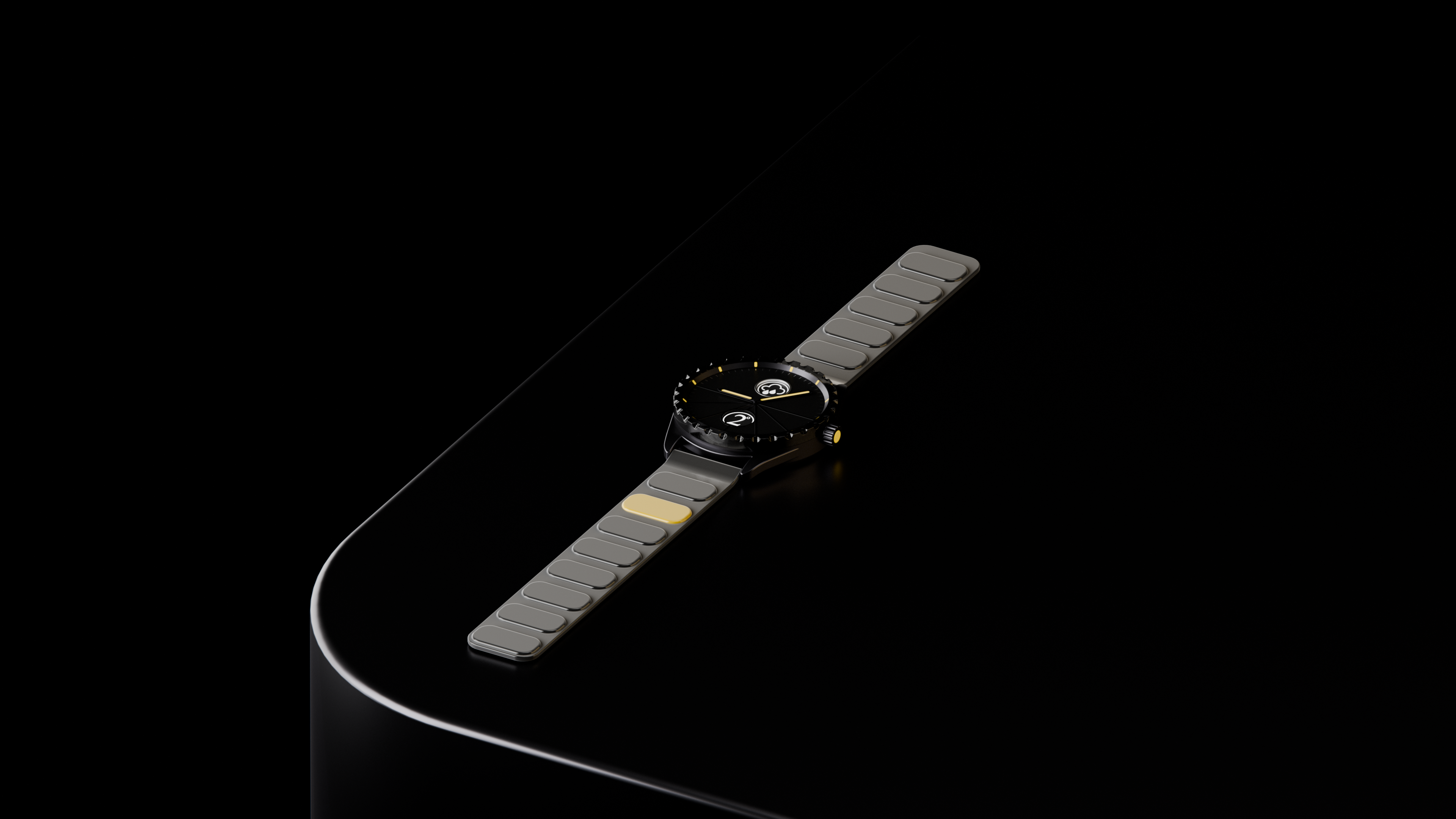
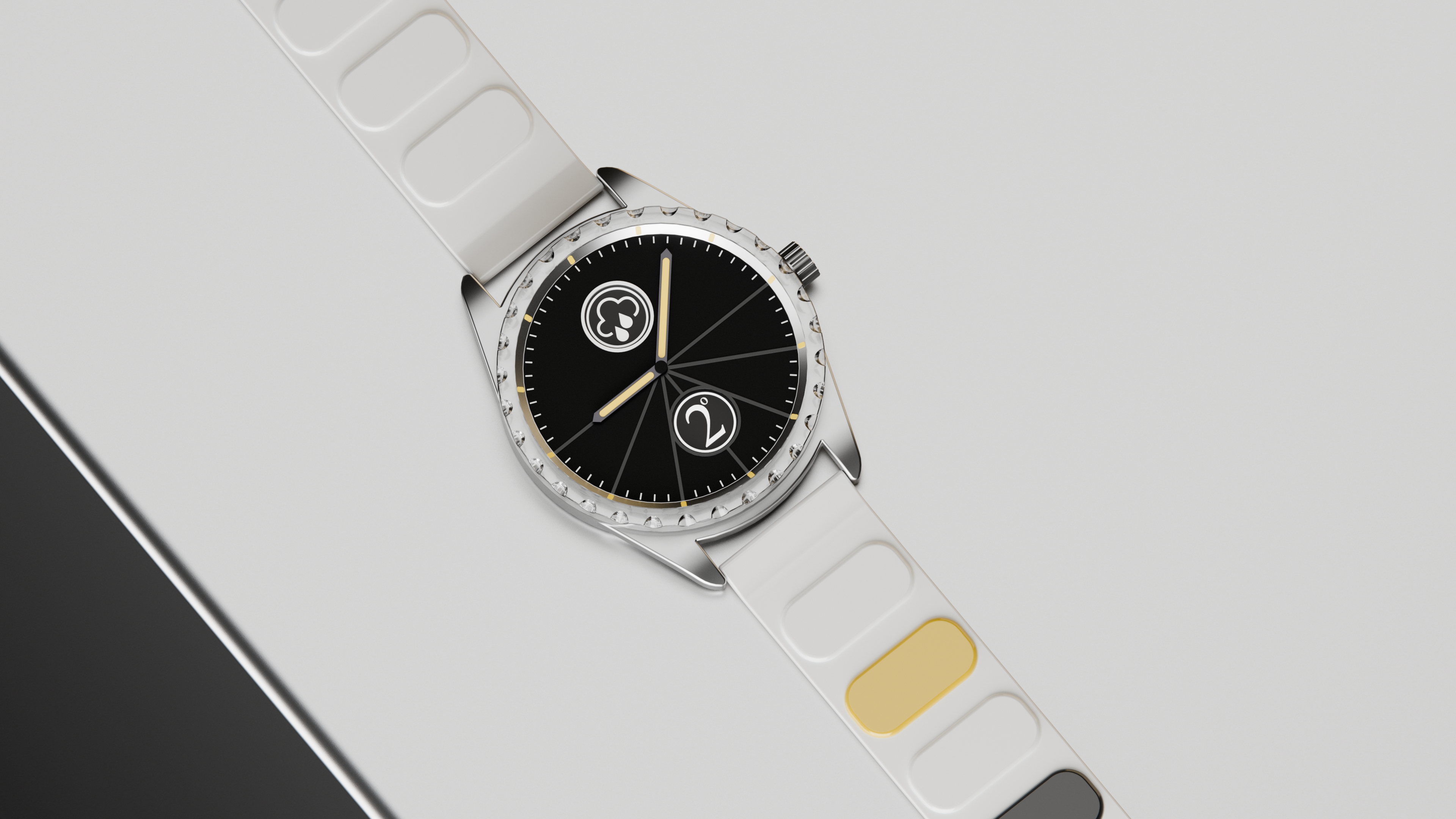
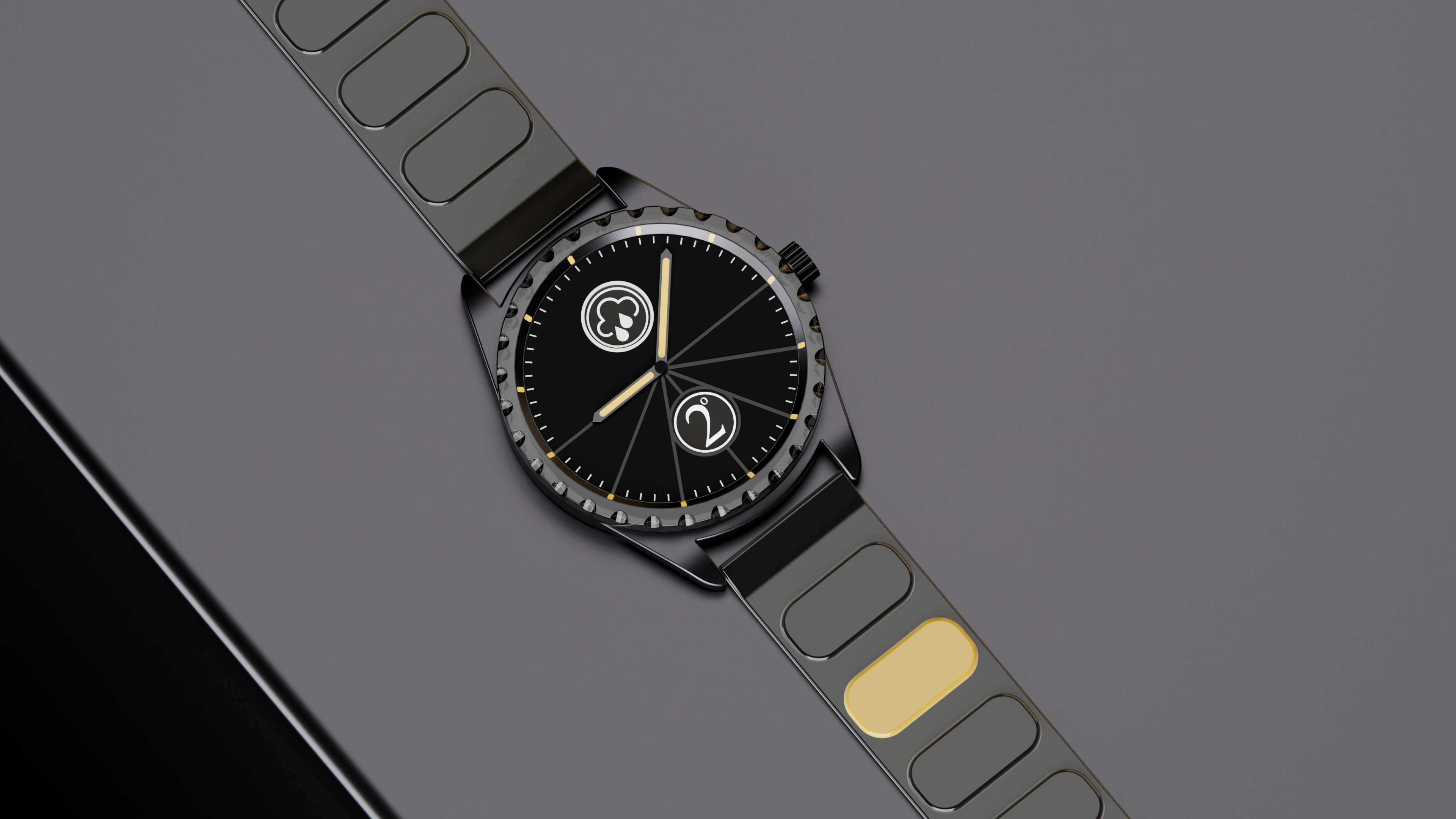
The Concept: A Nothing Hybrid Watch
Watches have long been an extension of the self - a constant on the wrist that has remained fundamentally unchanged for decades. Then came the smartwatch.
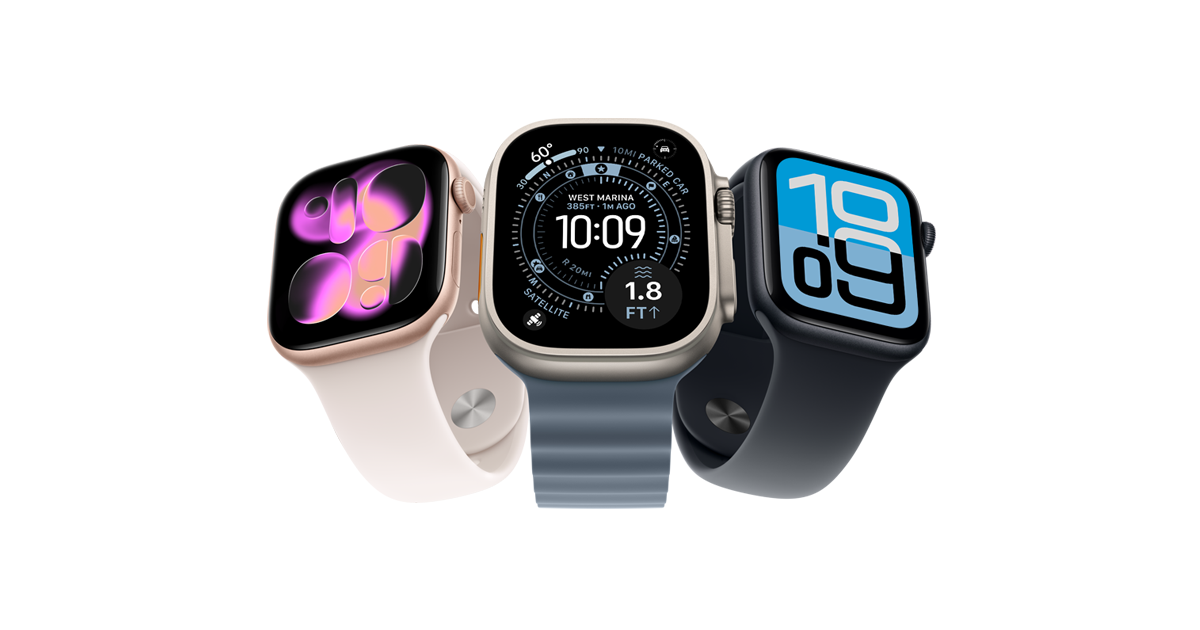
Mainstreamed by Apple, the category exploded. Every major tech brand now offers a “wrist computer” crammed with more features than most users can recite. While these devices are objectively impressive - and, in Apple’s case, lifesaving - they often fail those who value the basics. What about the user who wants a striking timepiece with just a few “smart luxuries”?
The Middle Ground
This is the space hybrid watches currently occupy: classic horology mixed with modern connectivity. Unlike full smartwatches, hybrids prioritise the analog experience, using secondary displays or subtle app integration to stay non-intrusive. Despite their potential, hybrids rarely get the spotlight and we don’t see them from major tech manufacturers.
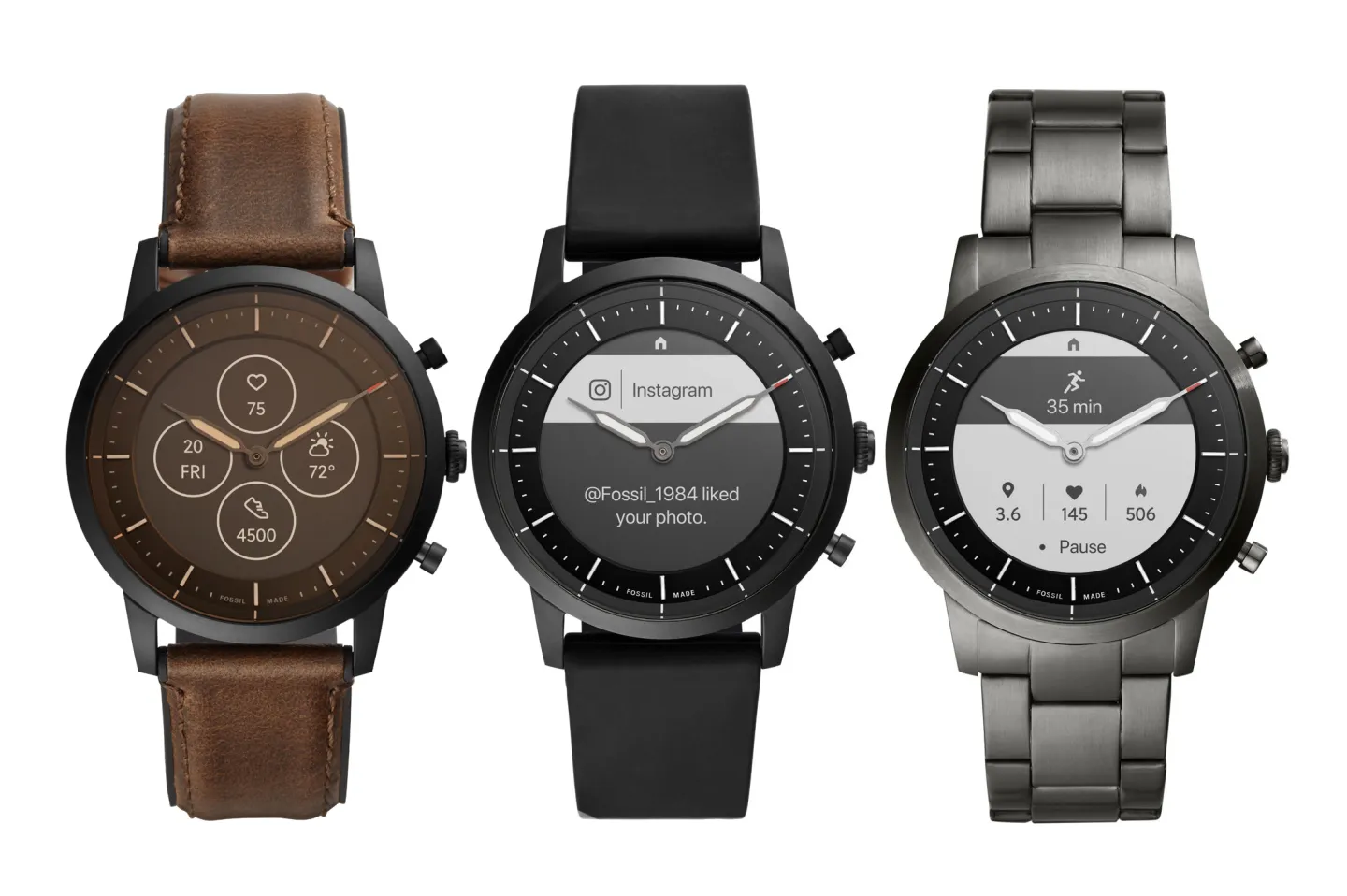
To most people, the smartwatch is just another gadget. There is no incentive to strike up a discussion about design or craftsmanship.
From Reference to Render
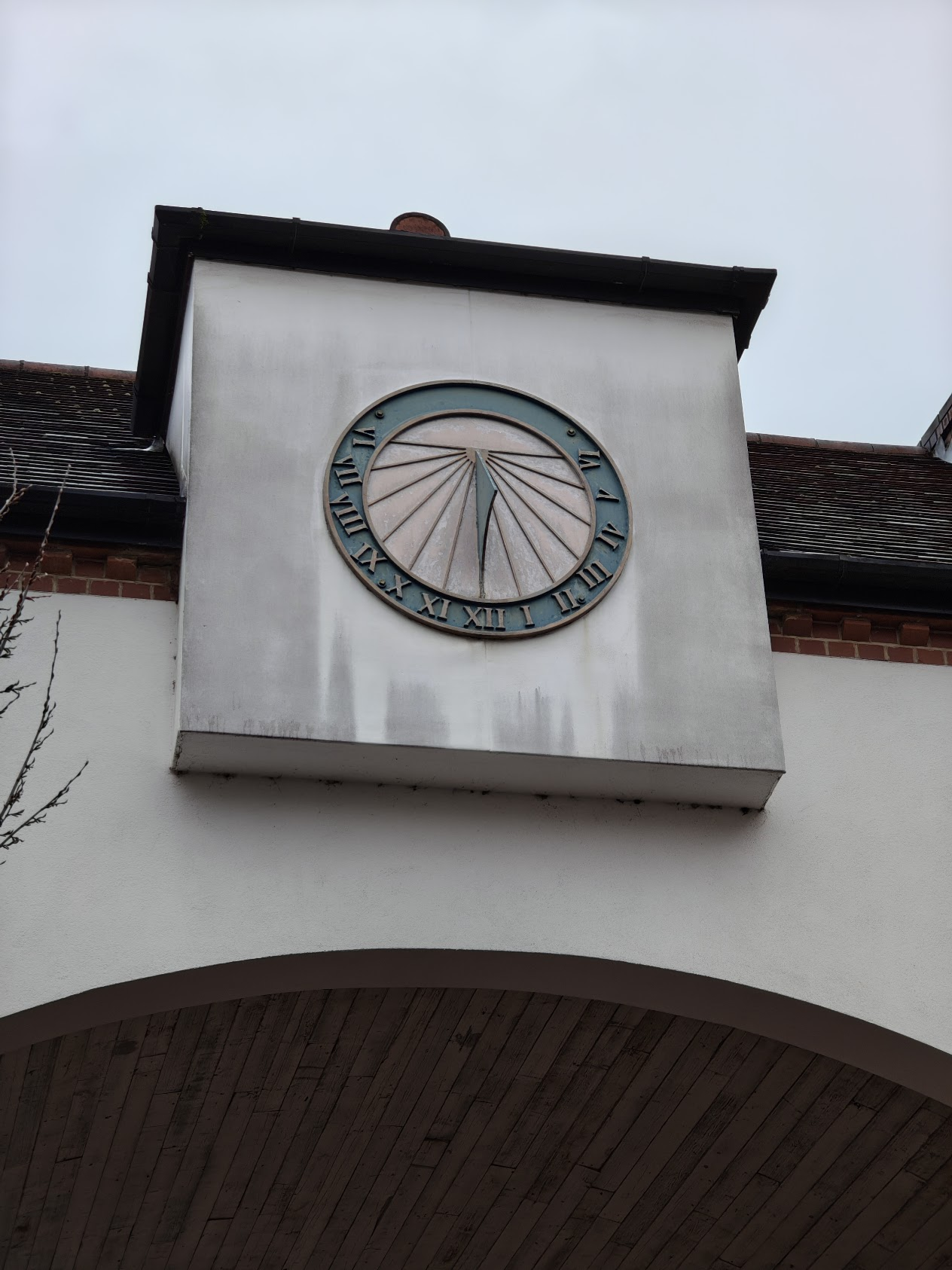
It started with a single image. While walking through my local city centre, I came across a sundial clock that caught my eye. At the time, I didn’t have a specific plan for it, but the geometry was too compelling not to capture for a future project.
The Process
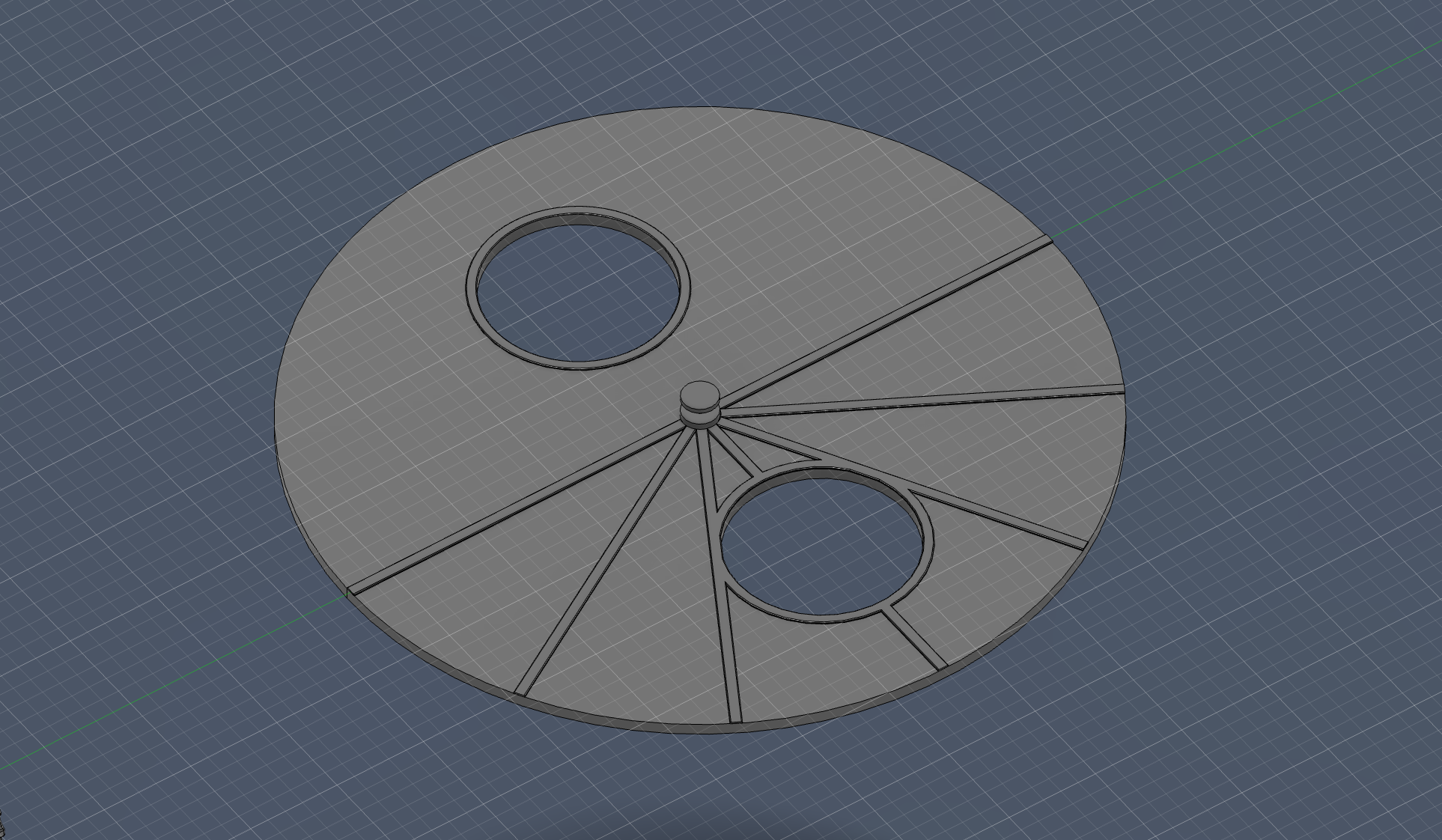
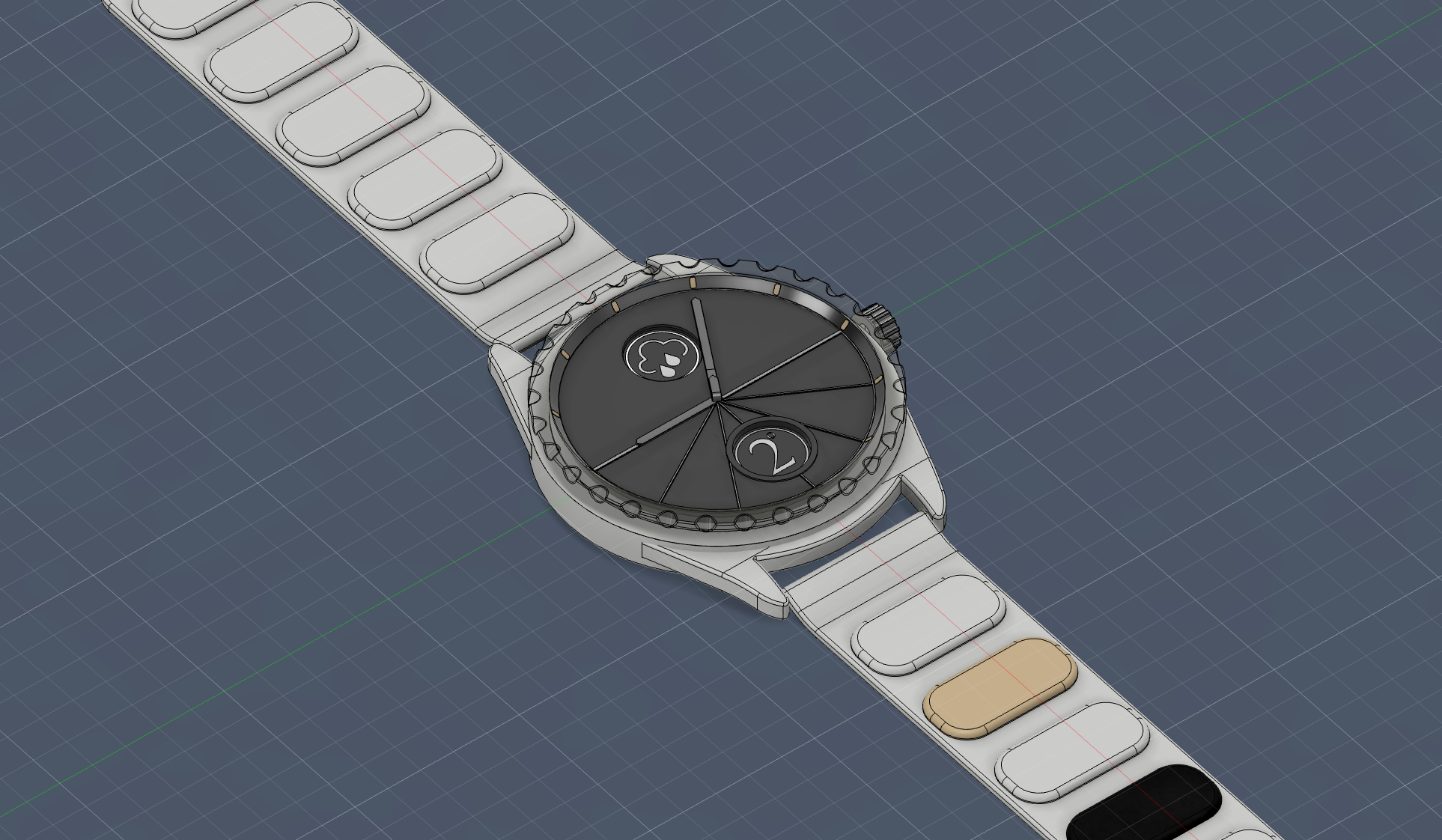
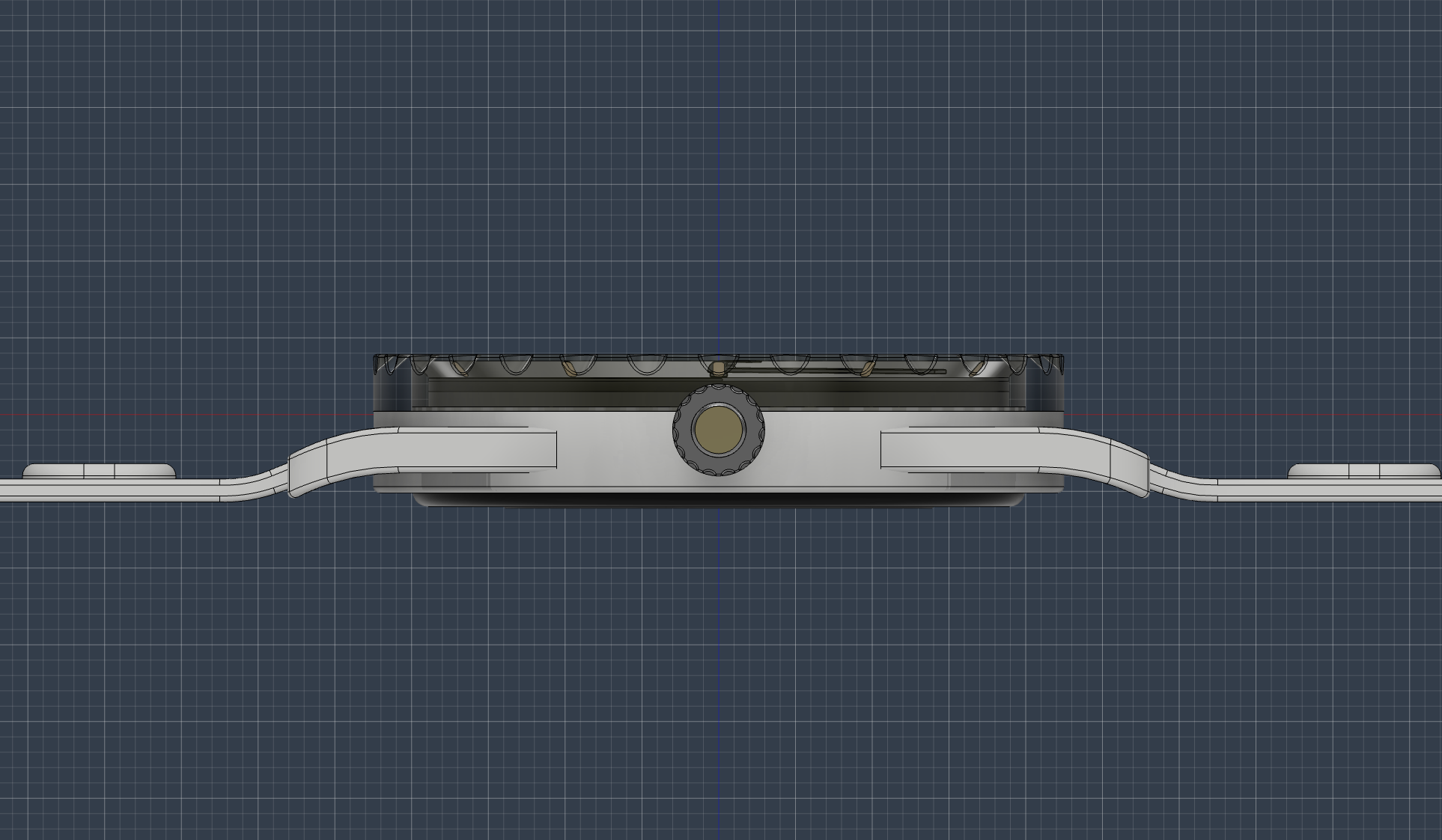
When I began the design phase, I turned to AutoDesk Fusion. While perhaps not a traditional rendering powerhouse, its precision and accuracy make it indispensable for modelling, especially real-world or functional applications. I knew I wanted to translate the sundial’s influence into a timepiece, though the exact form remained a mystery in the early stages.
Inspirations
In searching for inspiration for this project, I looked at the established players: Apple, Samsung, OnePlus, Fossil, and Withings. Each offers a different vision of the wrist, but two specific elements stood out to me as essential for my timepiece.
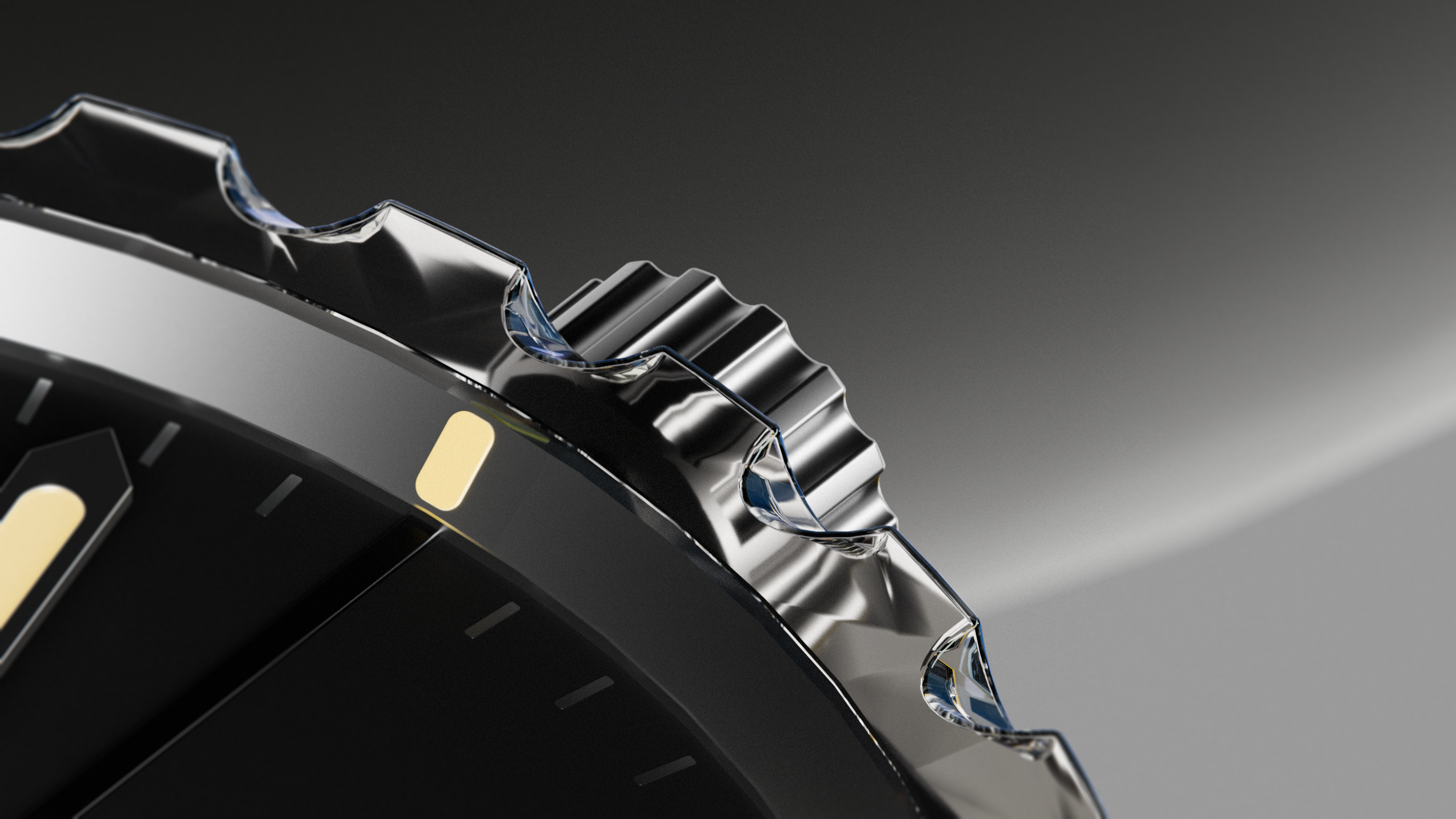
I’ve always been drawn to the rotating bezel - a staple of classic diver watches and a standout feature on certain Samsung Galaxy Watches. I knew I had to include one. Beyond the potential for UI navigation, there is an undeniable “fidget” appeal to a high-quality bezel. I wanted to capture that satisfying, mechanical ratcheting sound and tactile click.
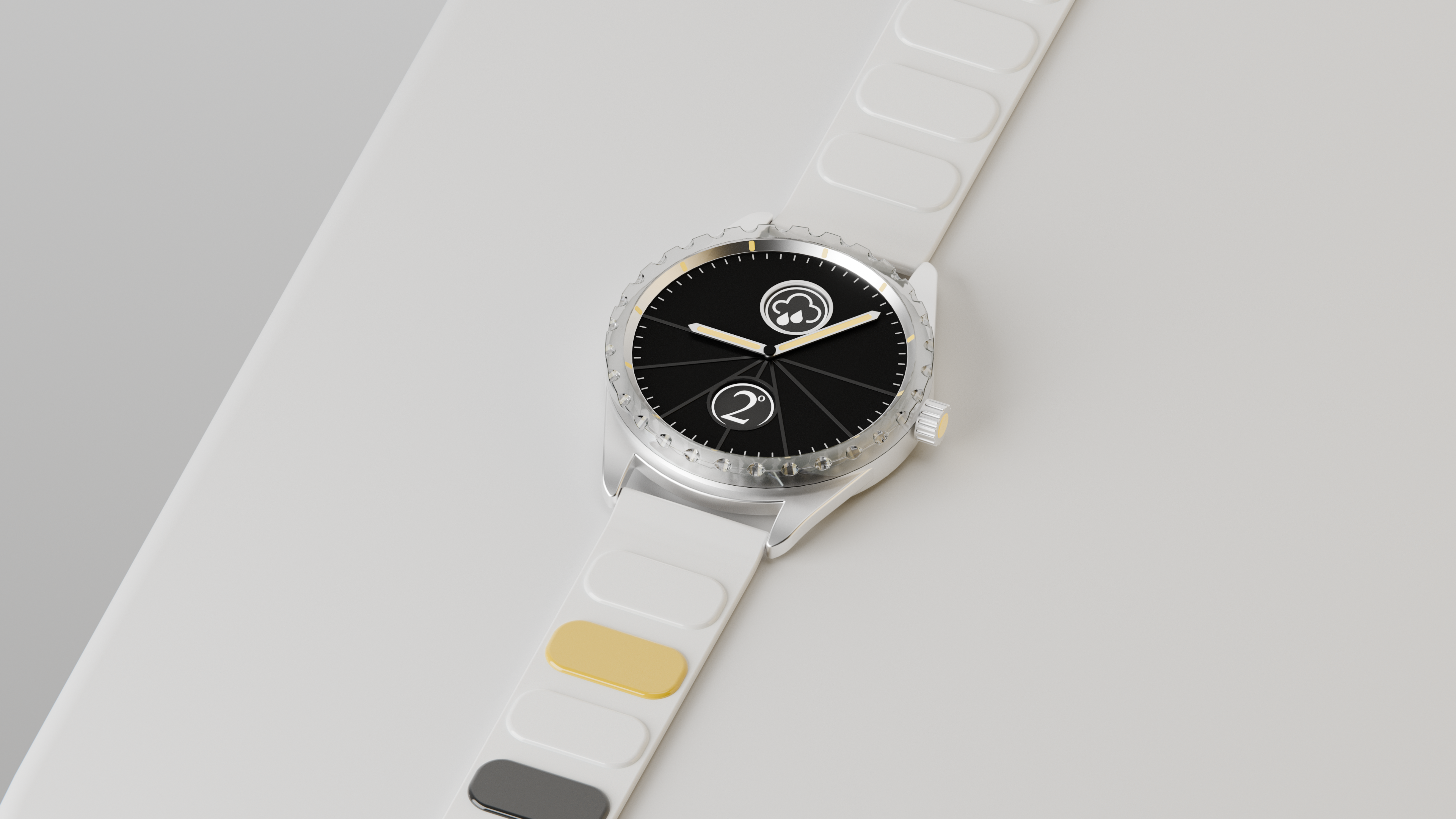
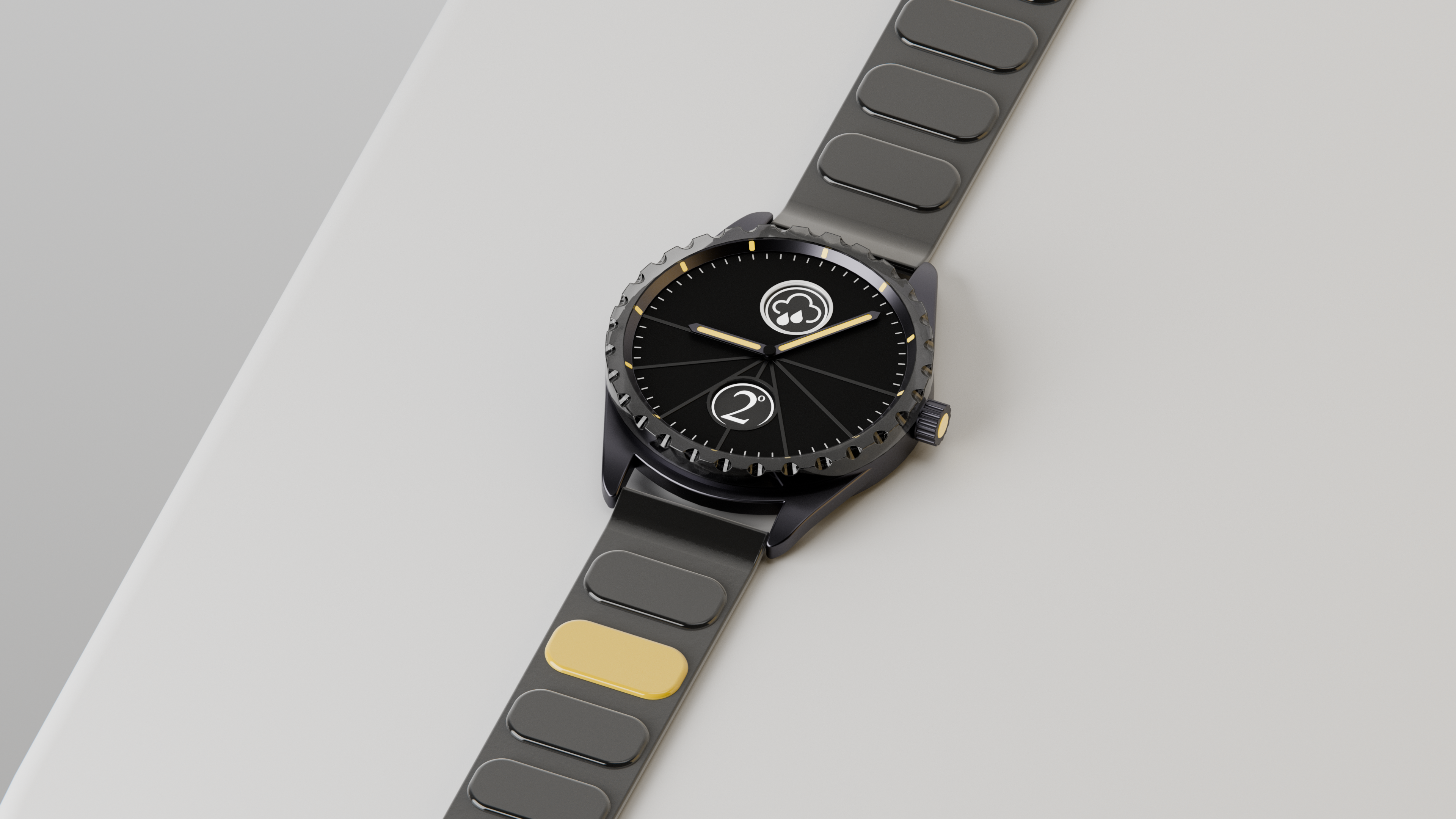
For the “smart” integration, I took cues from Withings. I really liked their approach: a small, circular OLED that blends seamlessly into the analog dial, especially on the darker coloured variants. It remains unobtrusive until needed.
I envision this as being the “Matrix” to the Phone (3) a subtle portal that delivers essential data without compromising the watch’s elegance. It’s information at a glance.
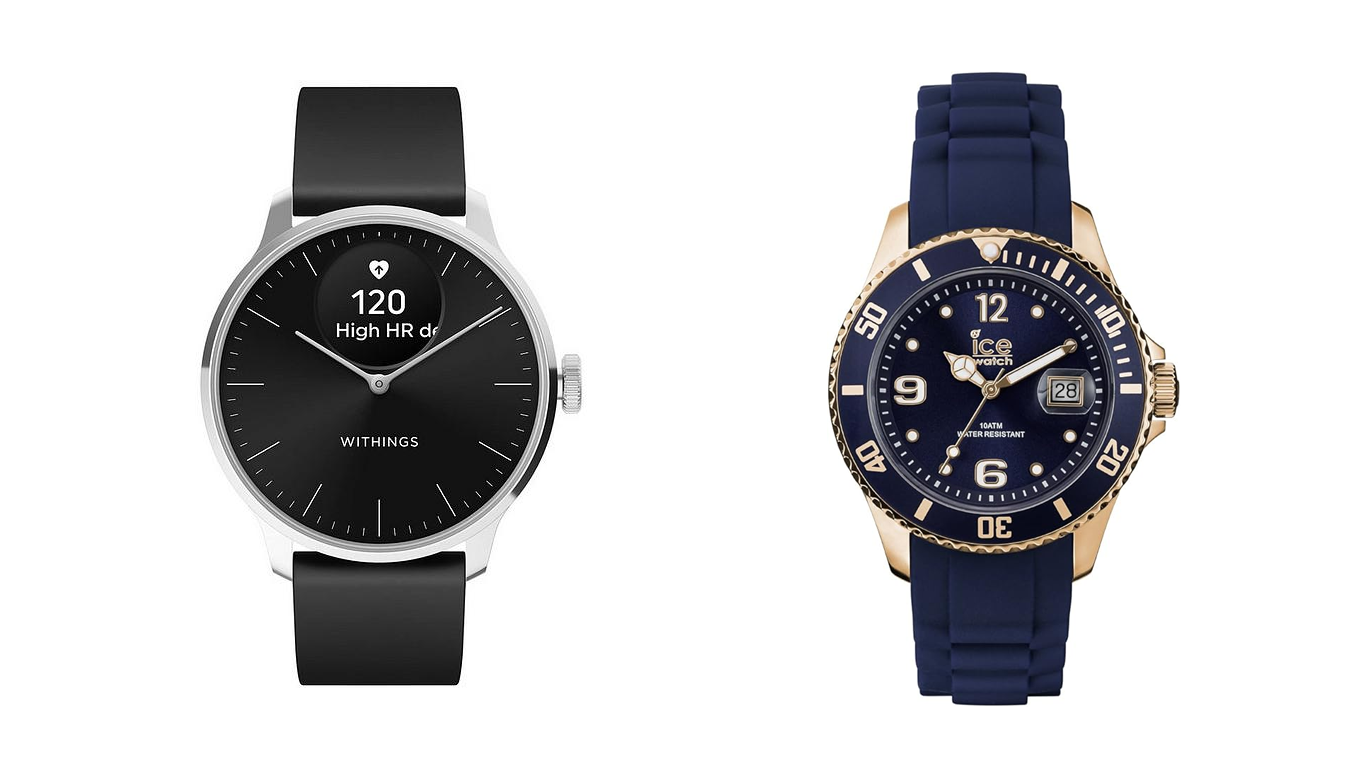
☝ I remember owning this Ice Style watch many years ago - there was nothing more satisfying than rotating the bezel over and over again.
Defining the DNA
As the geometry evolved and I began experimenting with materials, the project’s identity shifted. The blend of raw industrial design, metallic accents, and calculated transparency felt unmistakably like a Nothing concept.
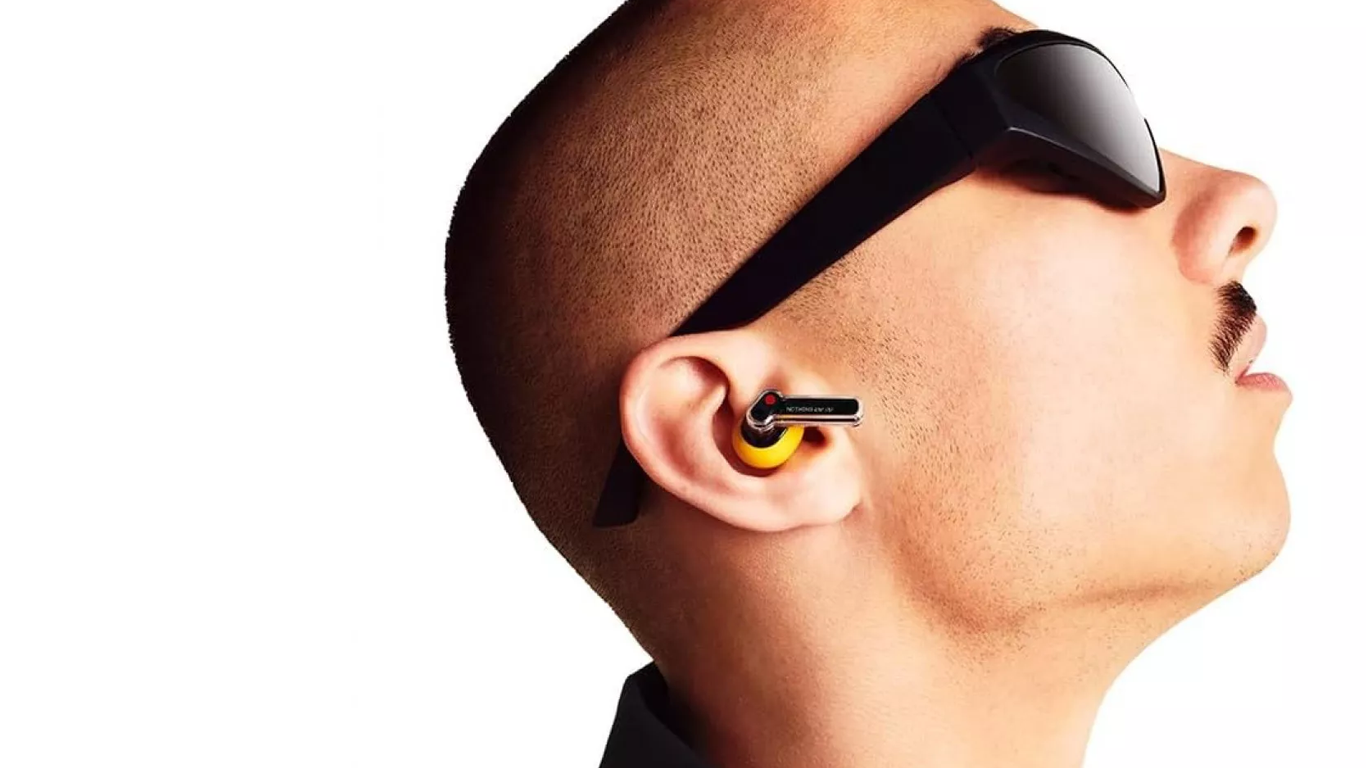
By leaning into this aesthetic, the watch became a natural extension of Nothing’s current ecosystem. It shares a singular design philosophy with Phone (3), Ear (3), and Headphone (1) - a perfect companion.
Why Nothing?
I love watches, but I’ve yet to find a smartwatch I’m proud to wear. I want a piece that appeals to techies and watch enthusiasts alike.
So, what if a brand known for industrial defiance took a swing at the hybrid? What if Nothing designed a premium hybrid watch?
Nothing is no stranger to pushing boundaries and stripping tech down to its essential, aesthetic core. I’ve designed this concept as a Nothing product because their design language is the only one that fits this vision: transparent, purposeful, and distinct.
The Smarts (& Nothing X)
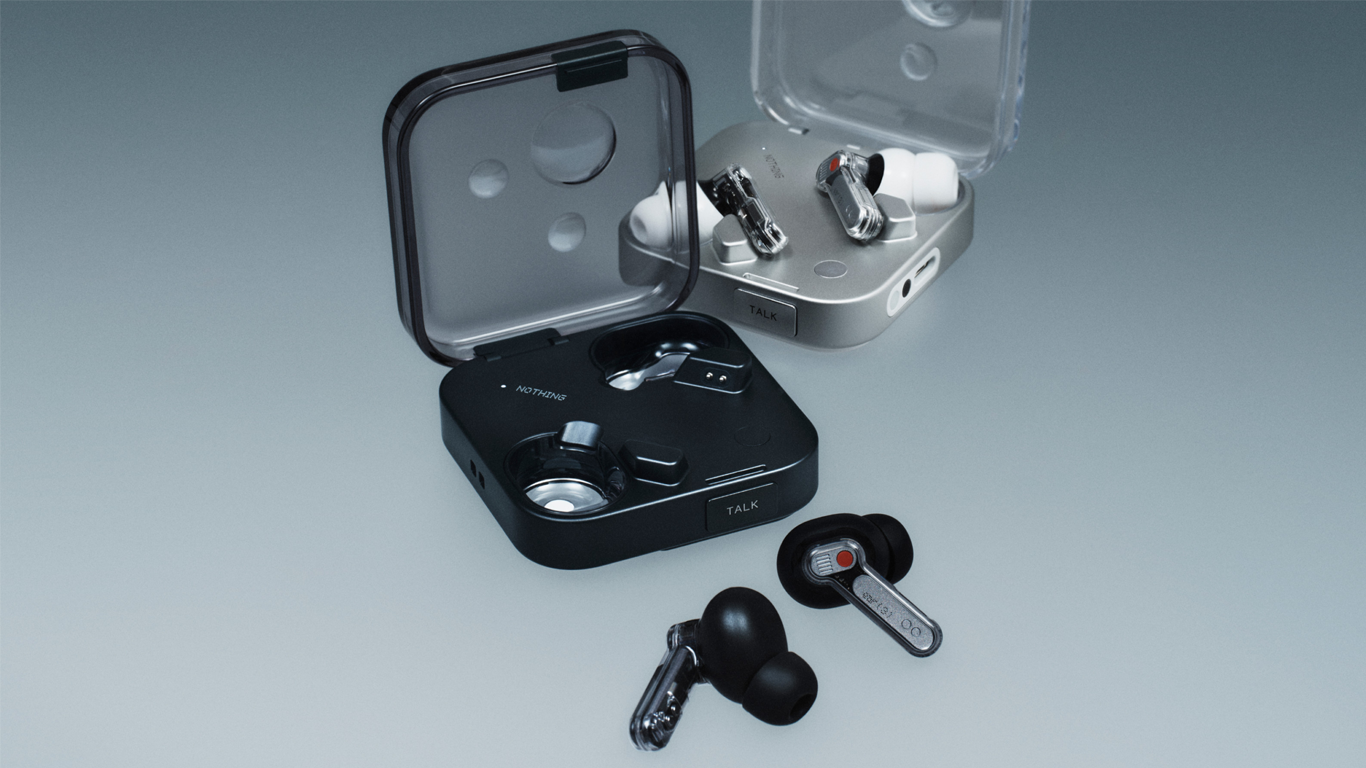
Fortunately, Nothing already has the perfect foundation for smart features: Nothing X.
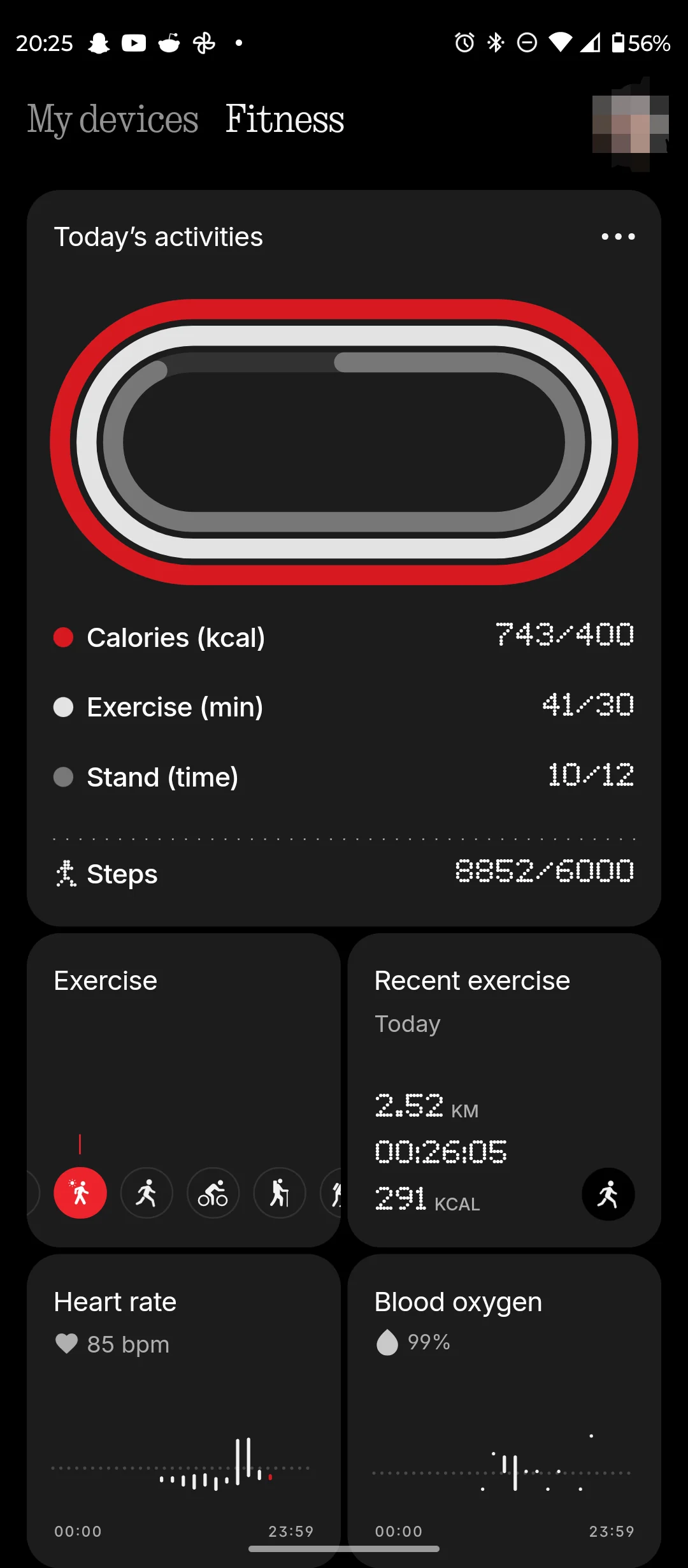
Currently the gold standard for companion apps, Nothing X is the ideal home for this hybrid’s data. Your watch remains an elegant analog piece, while the app handles the heavy lifting. Want a deep dive into your sleep patterns or a GPS map of your morning run? It’s all there in the app. The watch screen stays clean, with crucial, but minimal information.
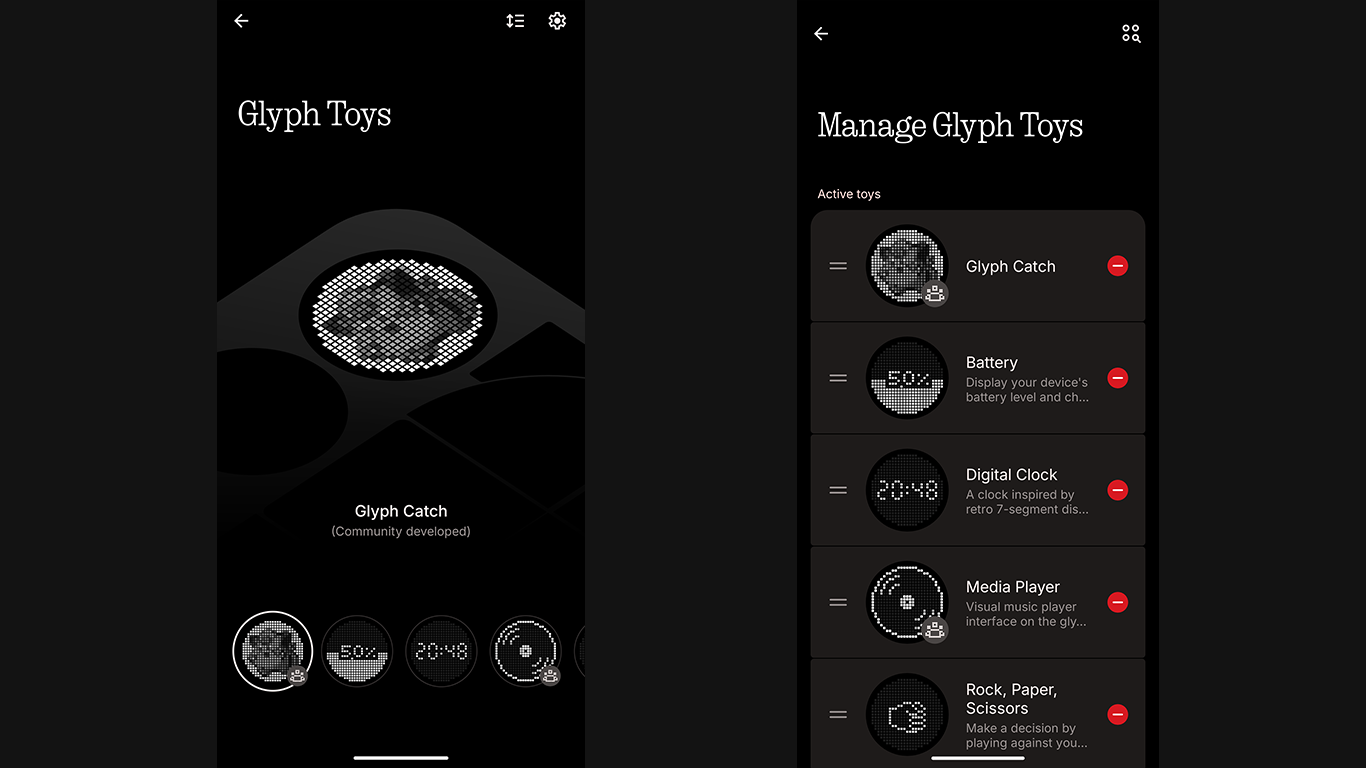
For the on-device digital elements, I’ve proposed a dual-screen setup (or a single panel recessed beneath a custom decal layer). Similar to Phone (3)s Glyph Matrix, users can customise these zones via Nothing X with a choice of presets, or community-designed options. Each zone can act independently - tracking steps on one and weather on the other - or work in tandem to show a single, detailed metric. In terms of selecting these presets, i like how this is handled on Phone (3), in the Glyph Settings menu. Adopting this style of UI would be perfect for the watch, while maintaining consistency and cohesion.
By utilising the rotating bezel and crown, users can cycle through their data presets. To reinforce this interaction, I’ve envisioned a circular transition animation that mimics the physical rotation of the bezel. It creates a seamless loop between the mechanical movement of your hand and the digital response on the screen.
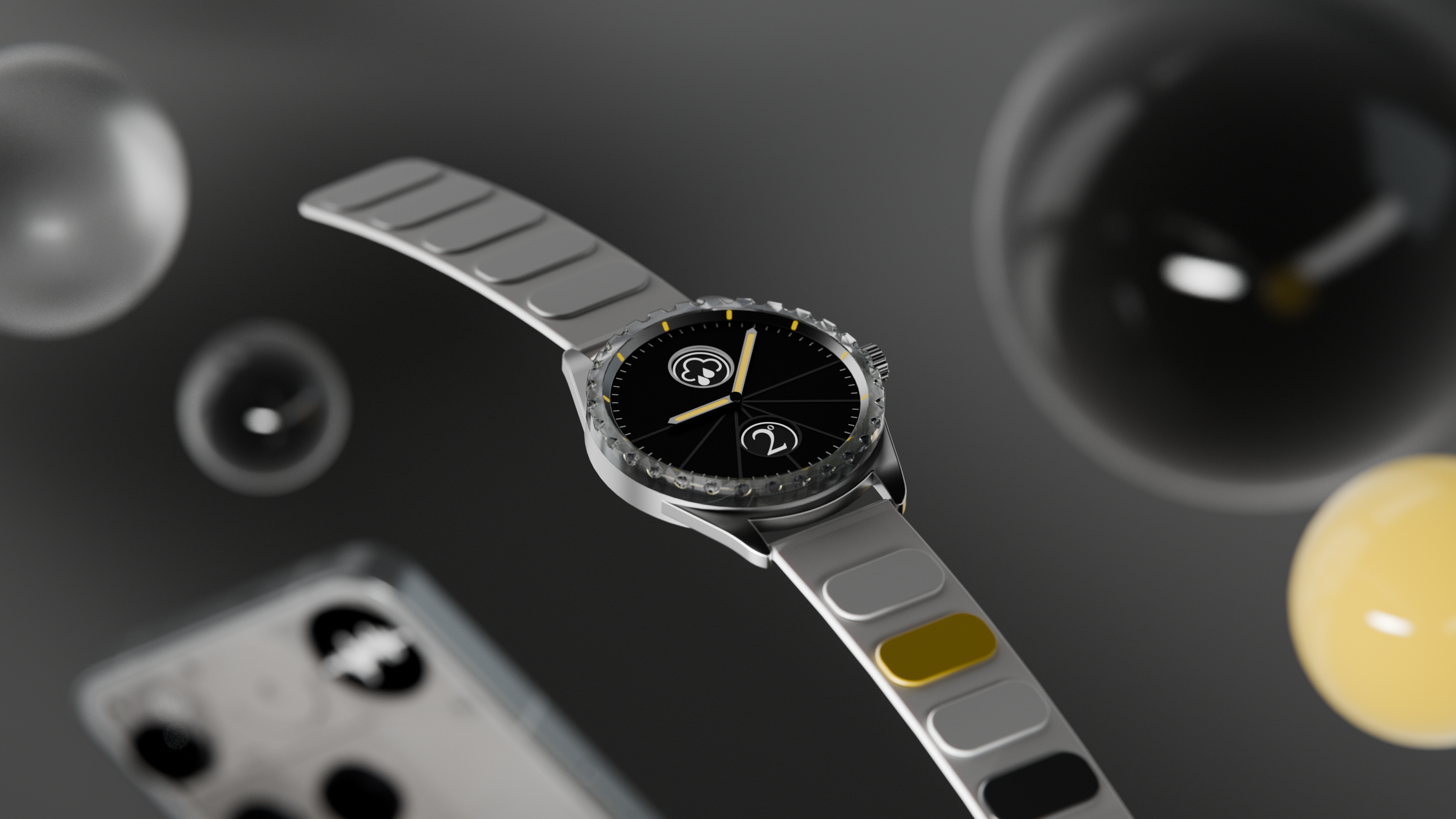
Final Renders
If you’ve made it this far, i appreciate you taking the time to read about the process. If you’ve skipped to the end to get a look at the juicy stuff, its fine, i won’t tell anyone. On that note, enjoy these final renders, and let me know what you think of a product like this.