Just when we thought the year was over for Nothing, the brand surprised us with a new phone, the Nothing Phone (3a) Lite.
This phone is the brand’s first foray into the entry-level smartphone market, a strategy that is difficult to understand given that this was the very role of the sub-brand CMF By Nothing.
I was able to use this phone for a while to evaluate it for everyday use, with fairly high expectations, as the Phone (3) has been my main phone since July.
This review is part of the recently launched Community Review program: More info
Design:
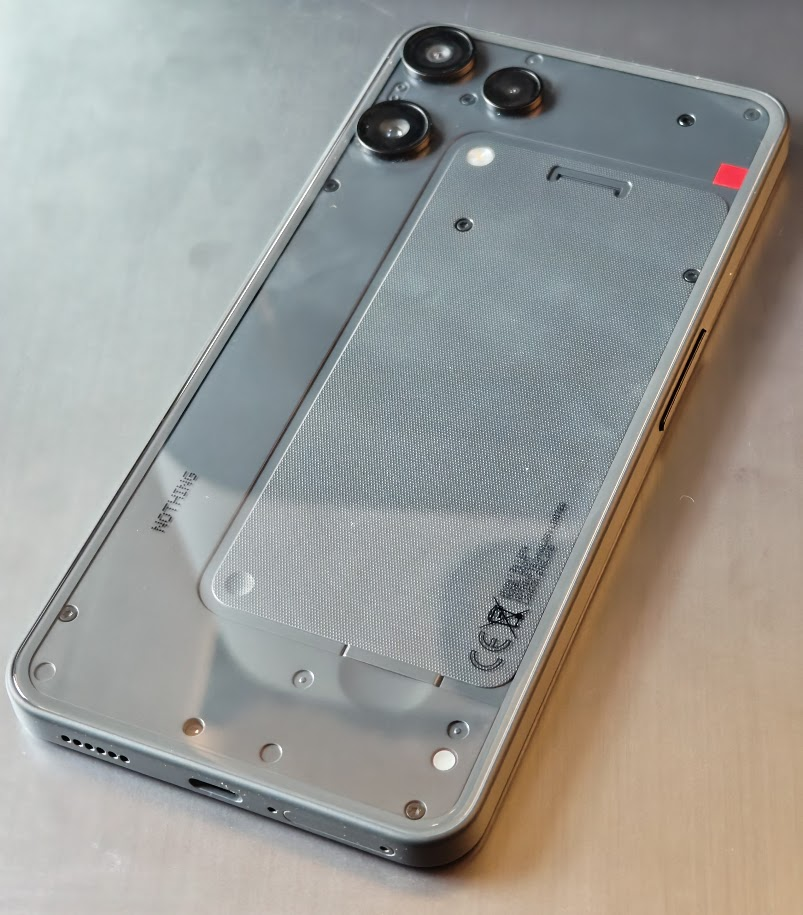
This is the first time we’ve seen a Nothing Phone design in this price range, and the result is simple and effective, without too many details. There’s a transparent glass panel that highlights a back plate with a design reminiscent of removable batteries, the distinctive red square that’s purely decorative, and the Glyph in the bottom right corner.
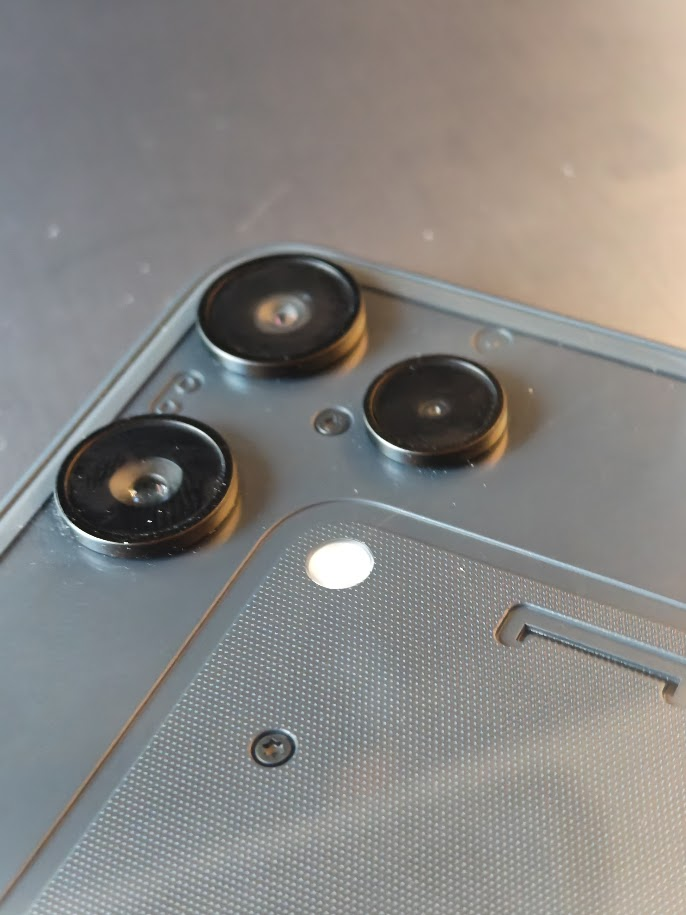
We also note the rather unusual camera arrangement, which is strongly reminiscent of the CMF Phone 2 Pro.
Box content:
This part remains fairly standard, but with a few notable differences.
You’ll find the phone, a transparent SIM card ejector, a 100cm cable that isn’t branded Nothing and seems fairly generic, and, surprisingly, a case. This is the new trend for Nothing, which now provides cases with some of its phones, notably the CMF Phone 2 Pro and the Phone (3), but which was not present on the Phone (3a) and is making its debut on the Lite range. This is much appreciated, but we are still searching for the logic behind the Lite if even the box content is better than on the standard version.
Display:
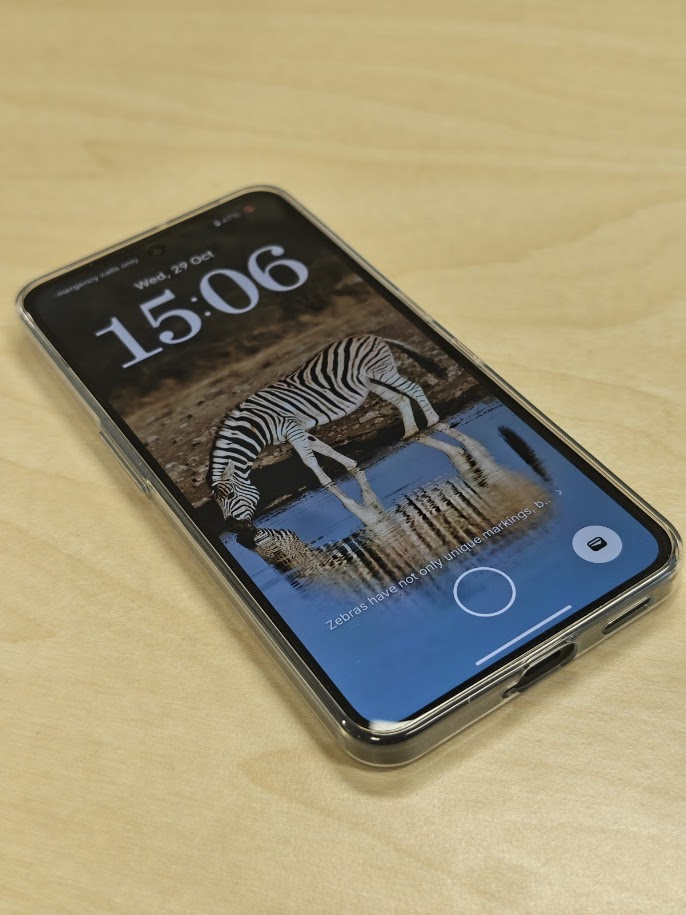
If you expected Lite to mean “compact,” that’s clearly not the case here with a phone that is ironically slightly larger than the (3a) and its Pro variant. (164mm x 78mm x 8.3mm VS 163.5mm x 77.5mm x 8.35mm)
With a 6.77″ screen, the Phone (3a) Lite is clearly not a compact phone, but it provide a decent screen which remain at 120Hz and share the same characteristics as the Phone (3a) screen. It’s a very decent screen that’s perfect even in bright sunlight, but we would have liked to see a differentiating factor in terms of size, which remains the same across the entire (3a) family.
Performance:
The first major difference with the (3a) is that the processor is no longer Snapdragon but Mediatek. The 7300 Pro is used here, which is also the same processor used on the CMF Phone 1 and Phone 2 Pro, both of which are excellent entry-level phones. It’s a processor that will meet your everyday needs without asking too much of it. You may notice some lag in the interface fairly quickly. It’s nothing too disruptive, but it does detract from the appeal of the 120 Hz on this phone, as everything can seem quite slow in the animations, especially when you’re used to the Phone (3), where everything is smooth. This doesn’t affect everyday use, and didn’t cause any problems during my trial period of standard use based on internet browsing and social media. It’s also possible to play a few games, but you’ll need to reduce the graphics quality to get the most out of the experience.
Battery life:
As the processor is much less powerful and more suited to standard use, the battery life is exceptional and can reach 60% at the end of a day with 4 hours of use, which could allow you to start a second day on a single charge. This is a very appreciable feature on these more affordable ranges and one that I miss on flagship models, which barely last a day with very light use of the processor’s capabilities.
The phone supports 33W fast charging, which allows it to be recharged to 100% very quickly. Combined with the long battery life, this is a major advantage for quickly getting back to work after a long session of use.
Camera:
As for the camera system, once again, it’s nothing like the Phone (3a), but it’s much closer to the CMF Phone 2 Pro, despite the disappearance of the 50MP telephoto sensor in favor of a 2MP macro sensor that struggles to be interesting, as the results are random and not really usable unless you’re an expert.
As for the results on the main sensor compared to the Phone (3) in low-light shots and night mode, the image processing is very flat with little contrast and questionable color balance adjustments, which is fairly typical for this price range, but the (3a) series had us accustomed to better.
Some Phone (3) vs Phone (3a) Lite pictures:
Glyph:
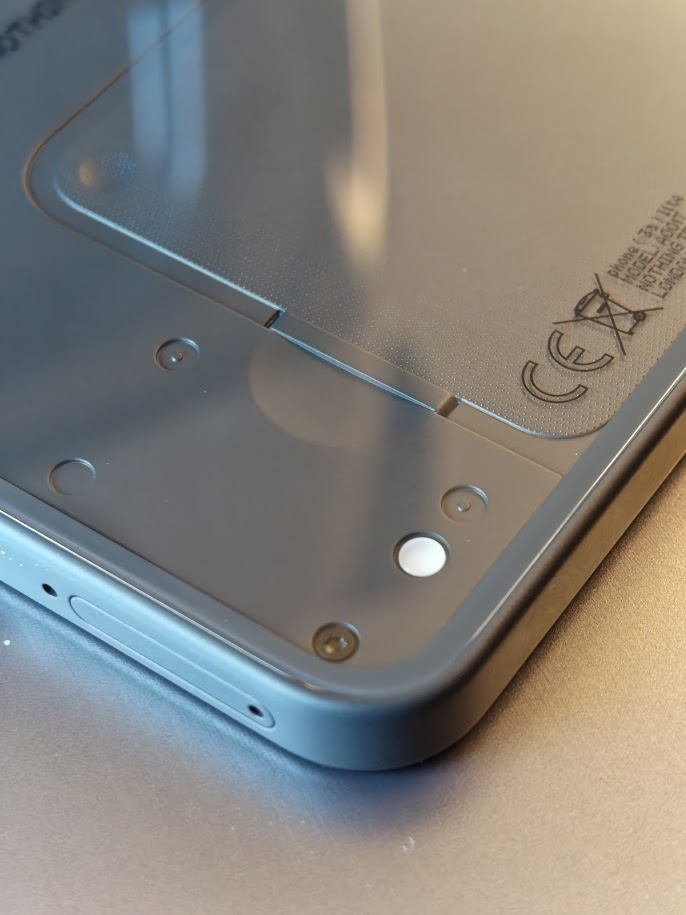
While the Glyph was “dead” with the arrival of the Glyph Matrix on the Phone (3), the Glyph in its LED form is back on this model with a simple ON/OFF LED in the lower right corner of the phone. There are no more brightness variations either, just a simple LED, which is almost ridiculous, but we can only welcome its return because it is so practical. Its location, although surprising, is actually excellent for seeing the LED even if the phone is far away on your desk or not necessarily in your immediate field of vision. I ended up really appreciating having this simple but clear and visible indicator, even if it loses much of the appeal of the Glyph as we knew it.
Software:
As usual, we find Nothing OS, this time in version 3.5 based on Android 15. The phone is covered by three years of Android updates and six years of security updates, which should be the same coverage as the (3a) series.
But while everything points to the lightness of the UI and the absence of bloatware, this new model gives us the unpleasant surprise of pre-installed apps, notably the Meta suite with Facebook and Instagram and their associated services, as well as a new wallpaper service which, although interesting in that it offers a new wallpaper on the lock screen each time you unlock it, it looks like an advertising billboard that I find hard to appreciate.
Fortunately, everything can be disabled or uninstalled, but we are a long way from the days when Nothing and its OS were sold as bloatware-free.
It’s worth noting that there is a microSD port, which is a first for a Nothing phone and not CMF.
Conclusion:
I’m still wondering why.
While this year’s series was so perfect, this Phone (3a) Lite is very similar to the CMF Phone 2 Pro and seems to share many features (processor, camera, microSD, etc.), making it legitimate to wonder if it isn’t actually that phone but with the Nothing design.
The removal of the CMF’s telephoto lens and its replacement with such a low-quality macro lens is disappointing, and the arrival of bloatware is very frustrating, especially given the pricing, which is not that attractive when the CMF Phone 2 Pro, which is “better,” is on sales, priced at €219 and the Phone (3a), which is far superior, is priced at €279 with promotions.
If you really like the Nothing design, it may be worth considering, although it might be better to wait until the price of the (3a) drops a little further.
If you prefer the software experience at a lower price, it’s better to go for the CMF Phone 2 Pro, which won’t have the Meta apps pre-installed.
We also wonder why this phone is included in the (3a) range with a Lite label when it is difficult to find an explanation for this (Included case only for the Lite, its slightly larger size compared to the base model, the different processors), which suggest that it is more of a separate model, as it shares nothing with the two previous models.
It’s difficult to recommend this phone, even though it will surely be perfect for some who are looking for an inexpensive phone and will find it in stores where the CMF Phone 2 Pro is not available.
Learn more: https://nothing.tech/products/phone-3a-lite


