I’ve spent the past few weeks daily driving Nothing’s latest flagship earbuds, the Ear (3). With a shift toward premium materials and the introduction of the new Super Mic and physical Talk button, there is plenty to unpack. Does this latest entry justify its place in the lineup - and more importantly, your hard-earned money? Let’s find out.
First Impressions, Design and a Little Back-Story
First, let’s address the name: yes, these are officially the Nothing Ear (3). You might wonder why that needs clarifying, but Nothing’s previous release - simply called ‘Nothing Ear’ - was a departure from traditional numbering. The idea was to move away from annual cycles and focus on meaningful upgrades that didn’t require a chronological suffix.
Predictably, that strategy didn’t stick. When Nothing announced they were returning to a numbered system, many expected the ‘Ear (4)’ to follow the fourth iteration. Instead, we got the Ear (3). While this ‘retconning’ caused some initial confusion, it was likely a move to align the audio lineup with their other flagship, the Nothing Phone (3) and Phone (3a), a year of 3’s.
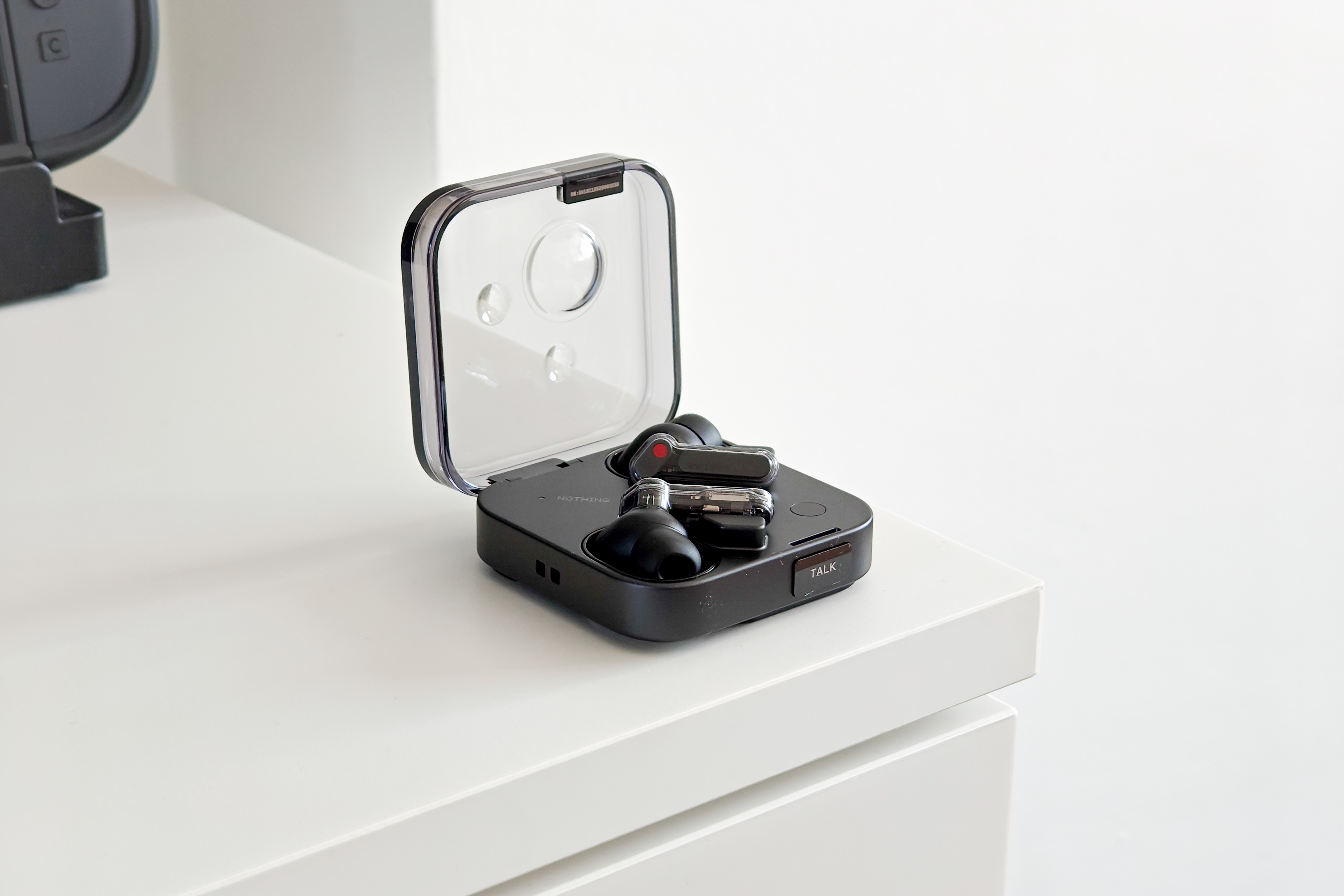
One of the most notable changes with Ear (3) is the evolution of the design. While the overall footprint remains familiar to anyone who has used previous iterations, the package has been refined with a slightly trimmed-down casing and the introduction of premium metallic materials. The top half of the case retains its iconic transparent plastic, but the bottom half is now metal - matching the aesthetic of the Phone (3) and Headphone (1). This creates a sense of maturity and cohesion across the brand’s ecosystem. The case also features a USB-C port, a lanyard cutout, and the new ‘Talk’ button and microphone, which we’ll dive into shortly.
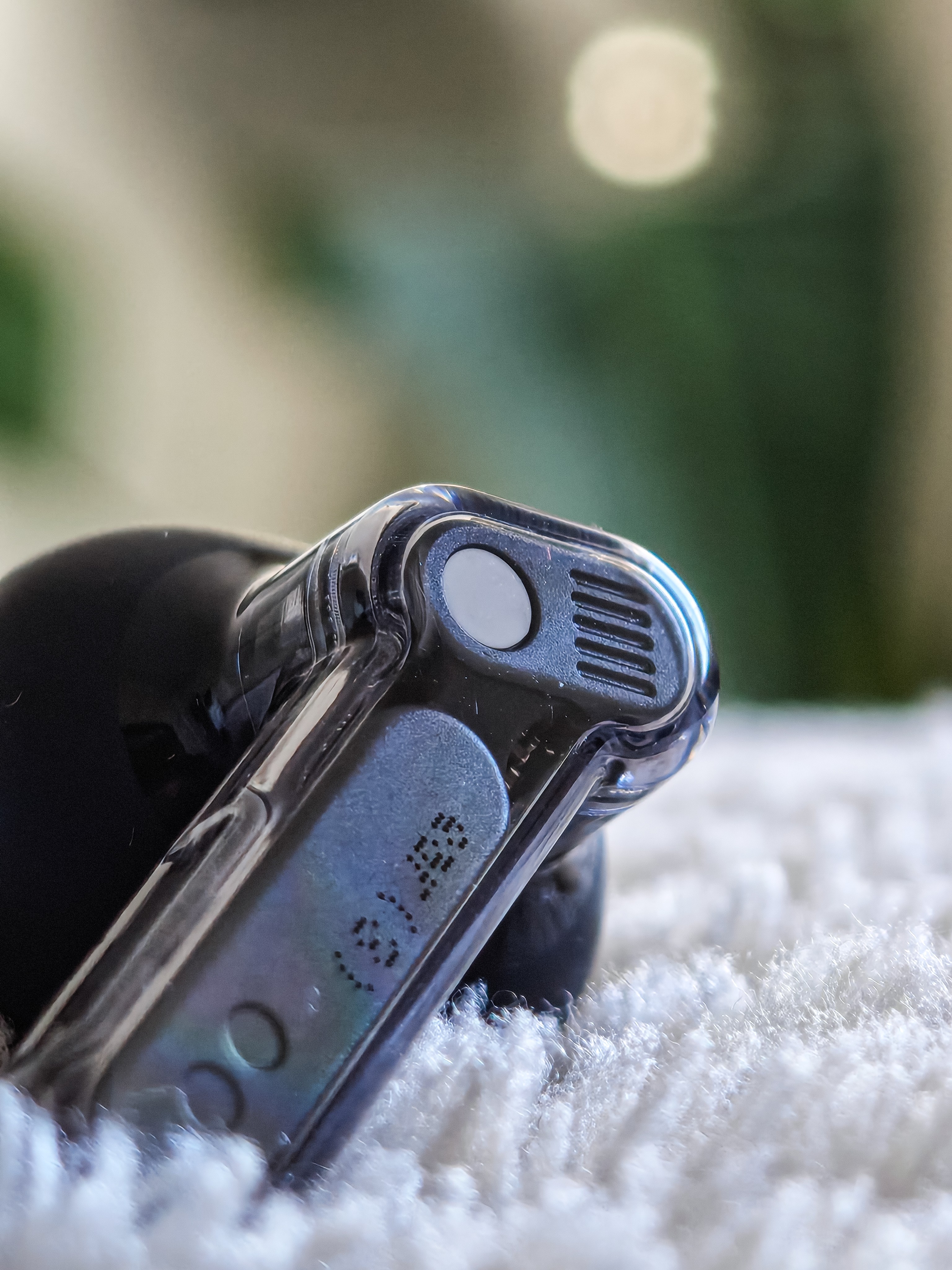
I fell in love with this case almost immediately. By blending the classic Nothing look with these higher-end materials, the Ear (3) feels significantly more expensive than its price tag suggests. The earbuds themselves follow suit; they keep the signature transparency and color-coded dots (white for left, red for right) but inherit new metallic accents along the stems. They remain a striking statement piece, yet stay impressively lightweight and comfortable for long-term wear.
The Ear (3) matures Nothing’s iconic transparent look by introducing premium metallic materials. The case and buds feel more high-end and cohesive with the Phone (3) and Headphone (1), achieving a “top of its class” feel without losing the lightweight comfort the series is known for.

Comfort and Daily Use
As I have previously alluded to, the Nothing Ear (3) is extremely comfortable. This is an area where Nothing has excelled across all generations of their Ear TWS. They remain small, light, and well-suited for most ear shapes. During several weeks of testing - including multi-hour listening sessions - I never experienced fatigue or had the buds slip out. In fact, there were moments I barely remembered they were in my ears. If you struggle with the pre-installed tips, you can swap them for the alternate sizes included in the box. Since everyone’s ears are different, finding the correct fit is essential; it not only improves comfort but significantly boosts ANC performance.
Transitioning to daily use, there are two more crucial talking points: the pinch controls and the app. These controls are effectively your primary way of interacting with the buds, unless you prefer pulling your phone out of your pocket every five seconds to manage calls or music. While the history of pinch controls on Nothing products has been somewhat mixed, I still prefer them over capacitive swipe controls. They have matured over time, and I believe they are now very close to the ‘sweet spot.’ The controls on the Ear (3) strike a good balance; they aren’t too stiff, yet aren’t sensitive enough to trigger accidental actions. However, one recurring issue is that at high volumes, the pinch feedback is almost inaudible, which can lead to mispresses - like pausing a track when you intended to skip it.
In the audio world, software is almost as important as hardware. Too many companies release incredible products at high prices only to pair them with poor apps. This is where Nothing X stands out. The Nothing X experience is easily one of the best in the audio space. Setup is quick and intuitive, the feature set is robust, and the overall polish across the Nothing and CMF lineup makes it a genuine joy to use.
The Ear (3) maintains Nothing’s reputation for exceptional, fatigue-free comfort. While the pinch controls have matured into a reliable ‘sweet spot,’ the feedback click can be hard to hear at high volumes. Combined with the class-leading Nothing X app, the daily user experience remains a standout feature.
Connectivity and Dual Connection
Connectivity has been rock solid; I haven’t experienced a single dropout or connection issue, which provides great peace of mind. One standout feature that has become essential to my workflow is ’Dual Connection’. This allows for seamless switching between two devices. For example, if I’m watching a video on my computer and a call comes through on my phone, the Ear (3) automatically switches the audio source so I can answer without any manual intervention. It makes multitasking feel effortless.
The Ear (3) delivers a stable, dropout-free experience powered by Bluetooth 5.4. The ‘Dual Connection’ feature is a highlight, offering seamless automatic switching between devices like a laptop and a smartphone, making it a perfect tool for multitaskers.


Audio Quality and Noise Cancellation
The Nothing Ear (3) excels in audio quality, delivering the performance you would expect from a £179 premium TWS. I was most impressed by the bass; it is remarkably punchy, achieving a depth that seems almost impossible for an earbud of this size. Crucially, this low-end power doesn’t sacrifice clarity. The bass is well-controlled, allowing the Ear (3) to maintain great performance across other frequencies. If there is room for improvement, the highs can feel slightly sharp at times.
To mitigate this, the Nothing X app provides ample customization. Beyond standard and shareable custom EQs, you can apply a personal sound profile based on an individual hearing test. This feature tailors the EQ to your specific hearing capabilities. I always use a personal profile to maximize my listening experience; it consistently reveals background instruments and subtle details that I otherwise might have missed.
Regarding ANC, I usually avoid it because of the ‘claustrophobic’ ear pressure it often creates. However, during testing, the Ear (3) was very impressive. With up to 45dB of cancellation, the medium and high settings did a fantastic job of masking typical commute noises - from busy traffic and roadworks to loud conversations on a bus. Even with ANC off, the passive isolation is effective if you have the right fit. More importantly, the usual sense of pressure was greatly reduced, making the ANC-on setting the best way to experience the audio.
Transparency mode, however, was less impressive. While external sounds are clear enough, my own voice sounded muffled and unnatural. I also find the use case limited, as audio above 15% volume makes conversation nearly impossible even with transparency enabled. I only really found it useful when going to a checkout, or getting on the bus, just in case I needed to respond or initiate a conversation - in which case I would pause the audio altogether or remove the buds. Having been spoiled by the outstanding transparency on the Headphone (1), the Ear (3) feels like a step down in this specific area.
The Ear (3) delivers outstanding, punchy bass that manages to stay clear without muddying other frequencies, though the highs can occasionally be sharp. The 45dB ANC is excellent for masking city noise without the usual ‘claustrophobic’ pressure, though the Transparency mode feels muffled and unnatural compared to the Headphone (1).

Battery Life and Charging
A device that looks and sounds great must also have the endurance to match - or at least charge quickly enough to get you back into the action. So, how does the Ear (3) fare in the battery department?
Here are all the specs as listed on the product page:
EARBUDS: 55 MAH
CHARGING CASE: 500 MAH
Charging
Fast charging
Playback
AAC:
Playback with ANC off: Up to 10 hours
Playback with ANC on: Up to 5.5 hours
Playback with ANC off (earbuds + case): Up to 38 hours
Playback with ANC on (earbuds + case): Up to 22 hours
LDAC:
Talk time
After daily-driving the Ear (3) for several weeks - typically involving a two-hour commute and a short lunch -break session with ANC set to ‘High’ - I’ve found the battery performance to be very reliable. The official figures are highly accurate. With my routine, I never struggled with the battery dying mid-session, though I do make a habit of charging the case before heading out for the day.
If you need your earbuds all day or exceed the quoted five-hour ANC playback limit, you may want to be more conservative with noise cancellation or ensure your case is topped up periodically. Fortunately, a quick five-minute charge provides an extra hour of listening time.
The Ear (3) offers dependable battery life that holds up well to real-world daily use, with official playback figures proving accurate in testing. While heavy users might need to manage ANC settings for all-day endurance, the fast-charging capabilities - providing an hour of playback in just five minutes - ensure you’re never out of action for long.
Super Mic and the Talk Button
The standout new features for the Ear (3) are the Super Mic and the physical Talk button on the case. Super Mic allows you to use the case as your primary input source rather than the microphones on the buds. The Talk button acts as the trigger: you can either hold it for a ‘push-to-talk’ experience or double-press it to enable permanent input. On paper, this setup improves both audio quality and ambient noise cancellation, leading to superior call clarity for the recipient. The Talk button also integrates with Nothing’s ‘Essential Space’ AI features for tasks like recording notes and other voice-driven actions.
In practice, the feature largely delivers on its promises, though it’s worth noting that Super Mic functionality isn’t supported in all apps, including major ones like WhatsApp. I tested this during standard calls across various environments, experimenting with different distances between the case and my face. Recipients noted that while the quality wasn’t a radical transformation, my voice sounded louder, more natural, and much better isolated from background noise. Unsurprisingly, performance dips as the case moves further away; I found the ‘sweet spot’ in loud environments to be between 5cm and 10cm from the mouth.
While it’s a nice addition, I’m not certain how often I’ll actually use it. The noticeable benefits don’t quite outweigh the sheer convenience of traditional hands-free calling. That said, there is a definite ‘cool factor’ and a bit of a ‘flex’ in holding the case like a professional microphone. Ultimately, picking up the case to use the mic feels better suited for AI integration - like quickly recording a note or setting a reminder - than for standard calls.
One final quirk: because you still need the buds in your ears to hear the other person, the muffled nature of the transparency mode means you still sound ‘unnatural’ to yourself. Even with the superior mic on the case, I found myself overcompensating because of how I sounded in my own head.
The Super Mic and physical Talk button offer a unique way to improve call clarity and noise isolation by using the case as an external microphone. While the hardware performs well and adds a certain “cool factor,” the lack of app support for services like WhatsApp and the muffled transparency mode mean it feels more like a specialized tool for AI notes and reminders than a replacement for hands-free calling.

Conclusion
Overall, the Nothing Ear (3) is a fantastic product and one I have thoroughly enjoyed testing. By evolving the design with premium metallic materials, Nothing has created a pair of earbuds that feel truly high-end and stand out in an increasingly crowded market. The sound quality is outstanding - delivering punchy bass without sacrificing clarity - and the ANC remains some of the most effective I’ve experienced on a pair of TWS. While the Super Mic and Talk button are niche additions, they are clever inclusions that offer genuine utility for specific use cases. At £179, the Ear (3) offers excellent value. It is a must-buy for fans of the brand and a compelling choice for anyone seeking a stylish, high-performance pair of earbuds that punch well above their price tag.
