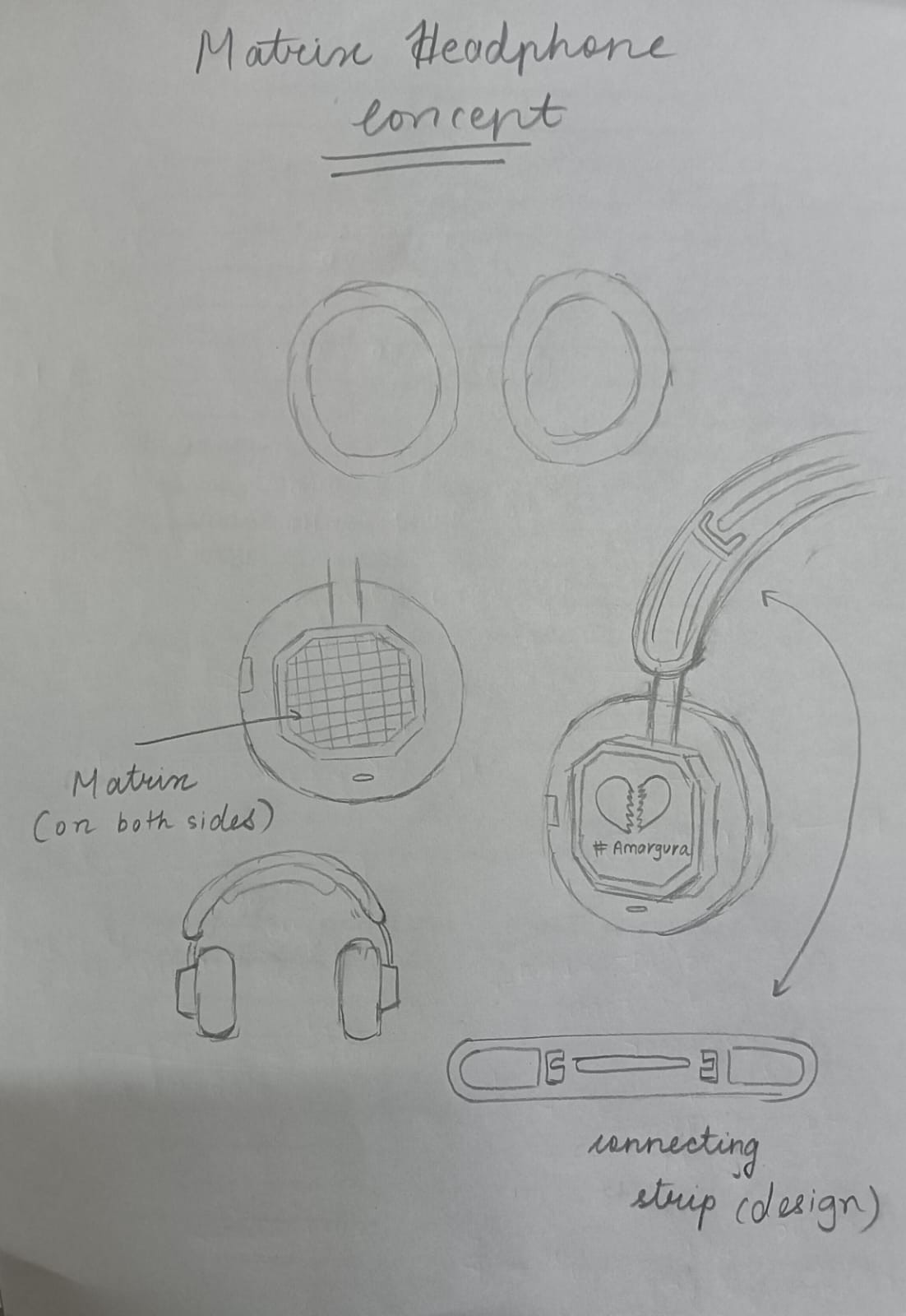
This concept introduces a dot-matrix panel on the outer sides of the headphones, designed as an ambient, expressive interface rather than a traditional screen.
While music is playing, the matrix activates at fixed intervals and stays visible for 5–10 seconds before turning off. During these moments, it displays:
For example, while listening to “Amargura” by Karol G, the matrix briefly shows a broken-heart symbol, then scrolls KAROL G — AMARGURA. This sequence repeats subtly until the track ends.
In addition to music information, the matrix also communicates system-level feedback, such as:
Bluetooth connection and disconnection status
volume increase or decrease through simple rising or falling patterns
battery or pairing indicators when relevant
The emotion and theme detection is handled at the software level, using music metadata from streaming services or lightweight phone-side processing. The headphones themselves only receive simple display commands, keeping hardware efficient and power-friendly.
To avoid misinterpretation and give full control to the user:
emotion display can be turned on or off
users can override or lock a mood manually
the matrix can be limited to only functional indicators if preferred
Battery usage is minimized through low pixel density or interval-based activation instead of continuous display.
For durability, the matrix is protected beneath a reinforced polycarbonate or hardened glass layer, ensuring resistance to drops and scratches while keeping weight increase minimal.
The matrix is not meant for constant viewing while wearing the headphones. Instead, it acts as a moment-based, expressive surface — translating sound, interaction, and system feedback into a calm visual language.
