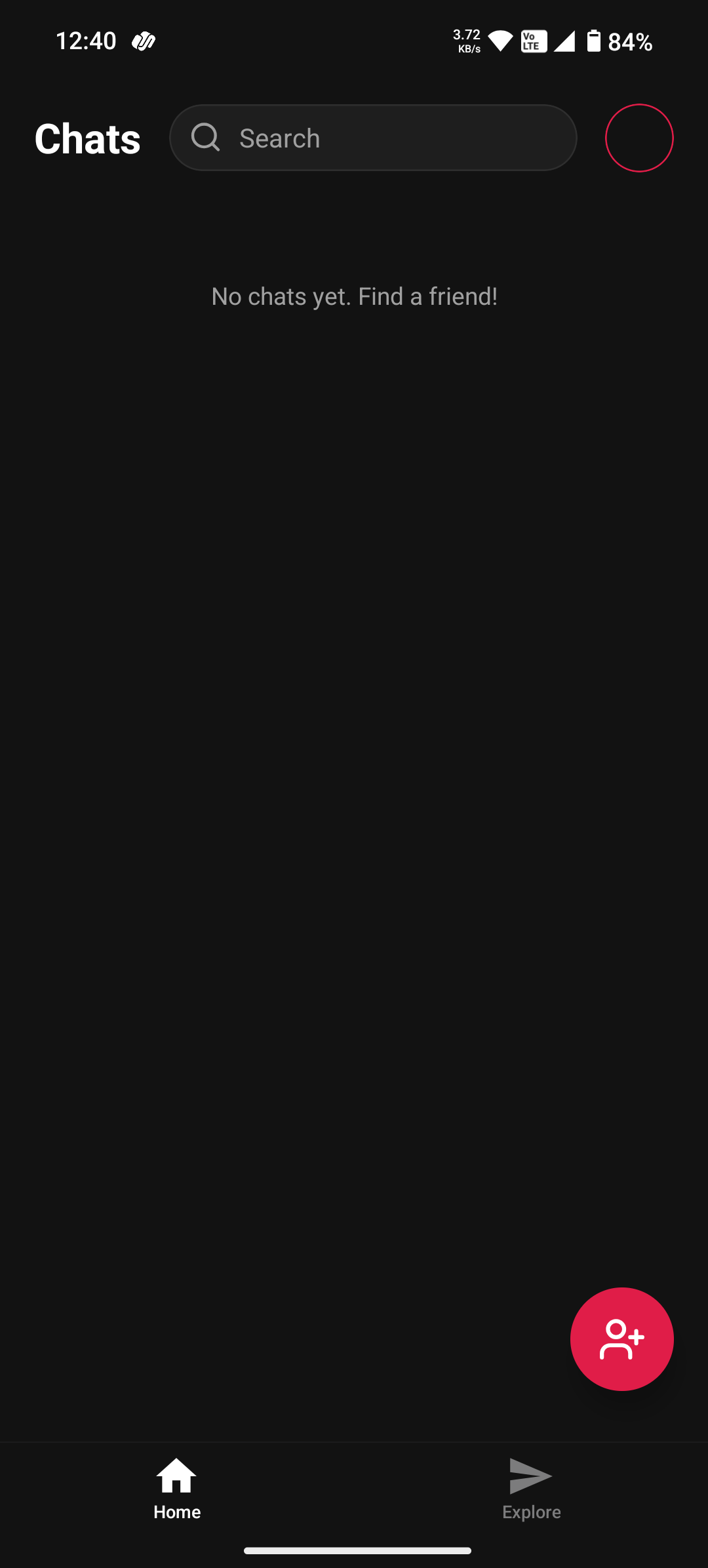
WilfredRoy To be honest, your response left quite a few things vague — so I wanted to expand on the idea and break down why a dedicated Nothing chat app might not be the right solution, and suggest an alternative approach that could better serve the goals of focus, minimalism, and privacy.
💬 First, about the idea of building a dedicated Nothing Chat app:
You’re aiming to create a messenger that reduces distractions, respects privacy, and integrates Nothing-exclusive features like Glyphs. While that’s a nice goal in theory, in reality, building a new messaging app is incredibly challenging — and possibly unnecessary.
🛠️ The technical reality:
A standalone chat app means you need to build and maintain:
Identity and account systems
Secure message delivery infrastructure
End-to-end encryption
Sync across devices and reliable uptime
That’s a huge responsibility — and frankly, a lot of complexity for a platform that’s supposed to feel minimalist.
🌐 The adoption challenge:
Even if you build the perfect messenger, most users won’t switch.
Why? Because everyone else is on WhatsApp, Telegram, Instagram DMs, etc. I’ve tried moving my friends to Telegram and even Hike in the past — but people always return to where the majority is. That’s the network effect problem. Unless you bring something radically disruptive or force a migration (like Apple iMessage, which is locked to iOS), people won’t move.
And we already saw Nothing’s previous attempt to bring iMessage via Sunbird-style integration — that didn’t end well. There were major security concerns, and it got pulled quickly. Messaging is a fragile space unless you fully control the ecosystem (which is rare).
✅ Instead of building a new app, here’s a better, more practical idea:
Introduce a “Social Media Sandbox” within Nothing OS
Instead of trying to replace all other messengers, just contain them — securely and intelligently.
Here’s the core idea:
Create a dedicated sandbox environment (separate from the main system — think “Nothing Social Space”).
Let users install social apps (WhatsApp, Instagram, Telegram, etc.) inside that sandbox.
The sandbox acts like a separate phone — just like Private Space — with its own Google account, separate app storage, and complete isolation from the main system.
BUT — unlike the current Private Space — apps in this sandbox should still be able to send notifications and trigger Glyph alerts for specific contacts or messages.
By doing this, users can still use the platforms they’re used to — but those apps are completely cut off from accessing data from the rest of the phone. No contact scraping, no clipboard spying, no location tracking outside the sandbox. Privacy is built in by default, not by toggling permissions manually.
🔦 Focus & Glyph Integration:
To align with Nothing’s philosophy of focus and minimalism, this sandbox can:
Let users define which apps or contacts inside the sandbox are allowed to trigger Glyph alerts.
Enable keyword-based triggers for Glyphs (e.g., only light up if a message says “urgent” or comes from a family group).
This allows users to stay connected without being overwhelmed. You won’t have to install five different chat apps in your main space — just keep them contained, and only get notified when something important happens.
🧩 Why this approach makes more sense:
No need to build a whole new messaging ecosystem from scratch
No pressure on users to migrate or convince others to switch
Strong privacy without relying on external APIs or insecure bridges
Keeps the Nothing experience clean, functional, and distraction-free
Offers exclusive utility to Nothing phones via Glyph integration
TL;DR
Instead of trying to compete with WhatsApp, Telegram, or iMessage, just build a Social Media Sandbox:
Apps run in isolation — can’t access your phone’s data
Still get notifications and Glyph alerts from important messages
Designed for focus, privacy, and real-world use — no compromises
This would be a unique, practical, and truly Nothing-style way of rethinking mobile communication.
Let me know if this fits into the direction you’re exploring — or if the app vision is aiming at something totally different.